facebook pixel

Yes, you can. It’s more achievable than ever. Whether you’re aiming for ambiance, supplemental heat during outages, or a design focal point, modern fireplace systems provide flexible solutions for nearly any home. This guide outlines the structural, mechanical, and code-specific considerations involved.


gas fireplace insert

Why Adding a Fireplace Makes Sense

A fireplace enhances comfort, adds real estate value, and provides heat resiliency. With options like wood, gas, and electric, safe and code-compliant retrofits are possible in homes with no existing chimney or fireplace cavity.

electric fireplace

Types of Fireplaces & What They Need

Wood-Burning Fireplaces

These are traditional fireplaces that burn real logs. They need a full chimney system and proper setup to keep your home safe and warm. Great for people who want a classic fire experience and don’t mind managing firewood. You can build a masonry fireplace or install a zero-clearance wood fireplace.

Learn more: “What Does a Wood Fireplace Install Cost?

  • Best for: High heat, traditional look, off-grid use.

  • Needs: A chimney and some space for venting and safety clearances.

  • Keep in mind: You’ll need to store wood and clean ashes.

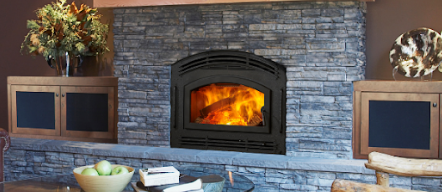
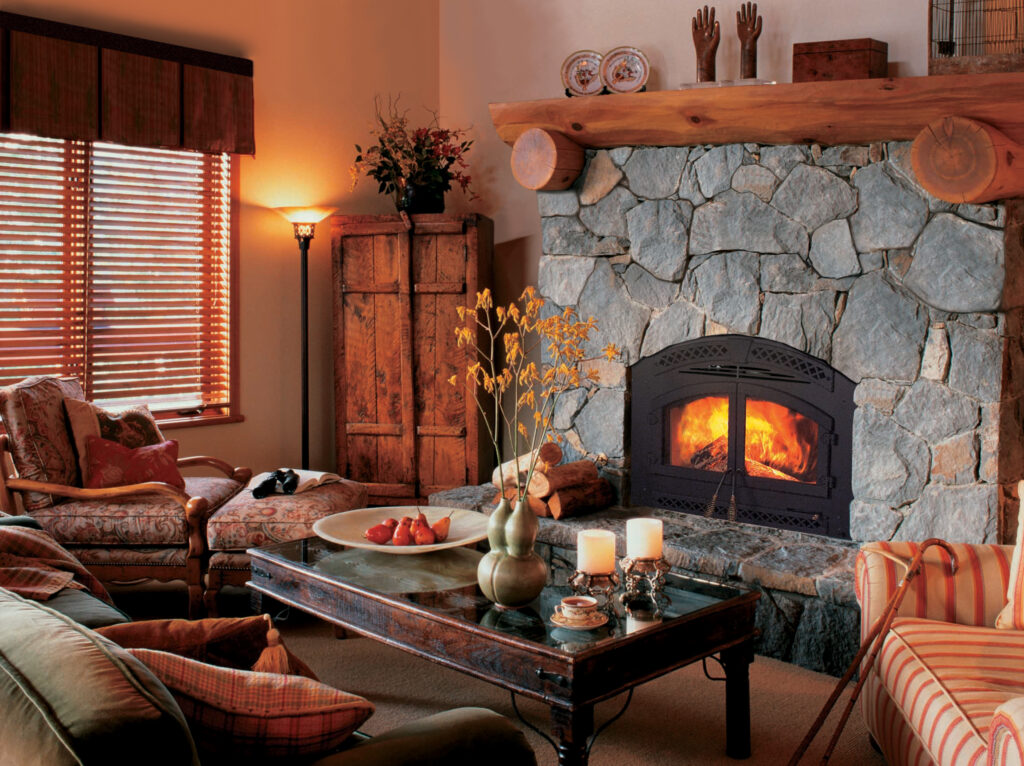
Pioneer-II EPA Certified Wood Fireplace with blazing fire by Quadra-Fire
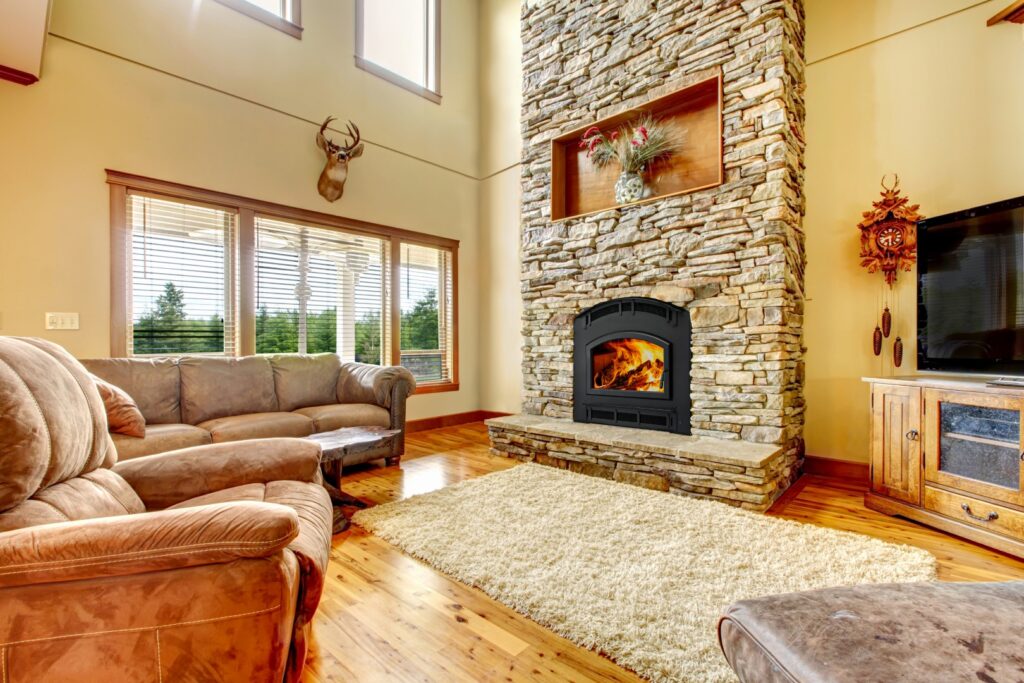
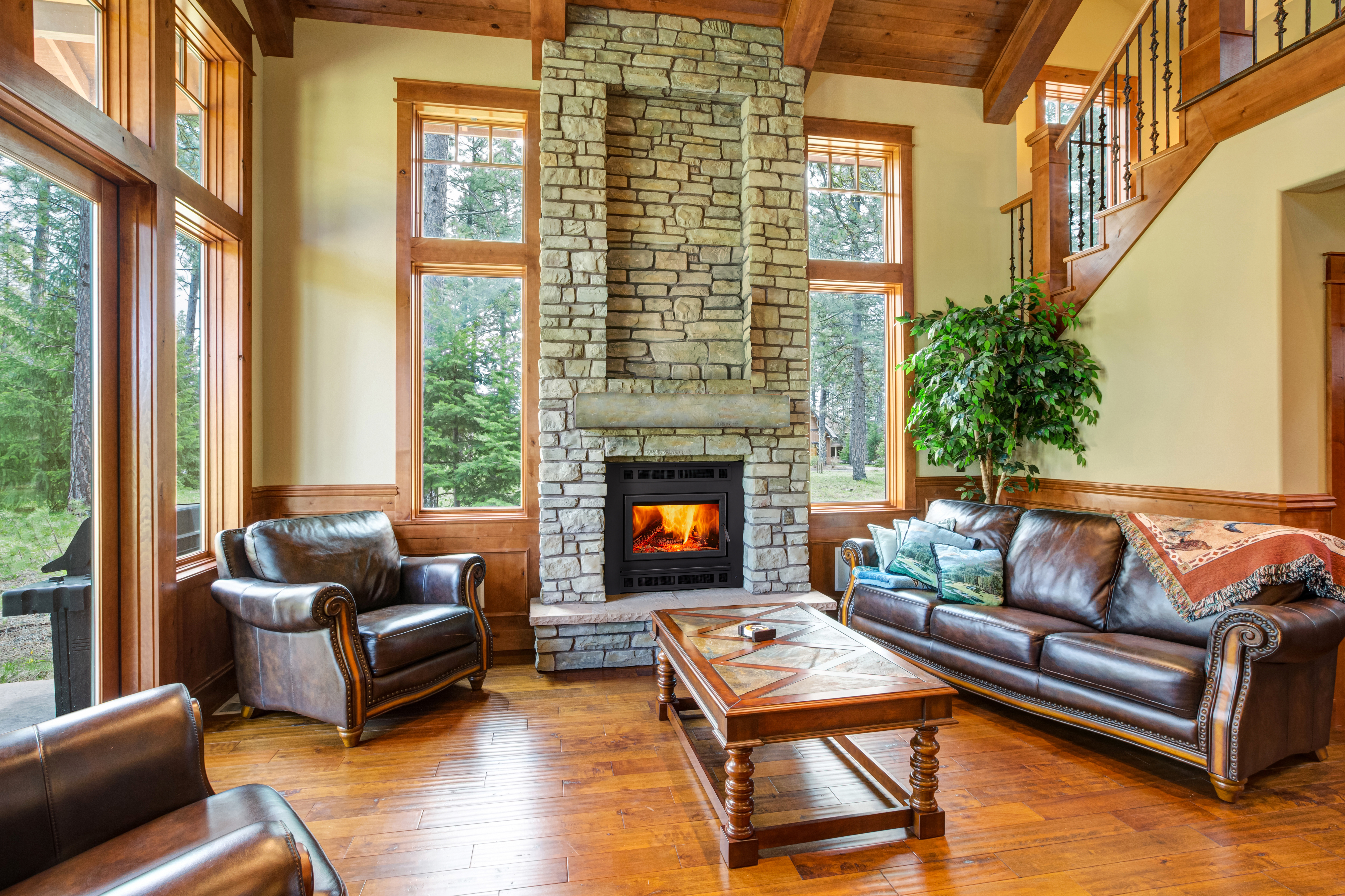
Pioneer III EPA certified wood fireplace in a log cabin in the woods

Direct Vent Gas Fireplaces

These use natural gas or propane and are sealed systems—pulling air in and pushing exhaust out through a small pipe in the wall or roof. No full chimney needed. A prefabricated gas fireplace sits flush with your wall and create significant heat. A well installed gas fireplace can act as the heart of any home. Uses both natural gas and propane gas (lp).

Learn more: “What Does a Gas Fireplace Install Cost?

  • Best for: Easy heating, clean flames, and remote control convenience.

  • Needs: Access to gas and a spot for the vent pipe to exit.

  • Keep in mind: Works even during power outages (with battery backup).

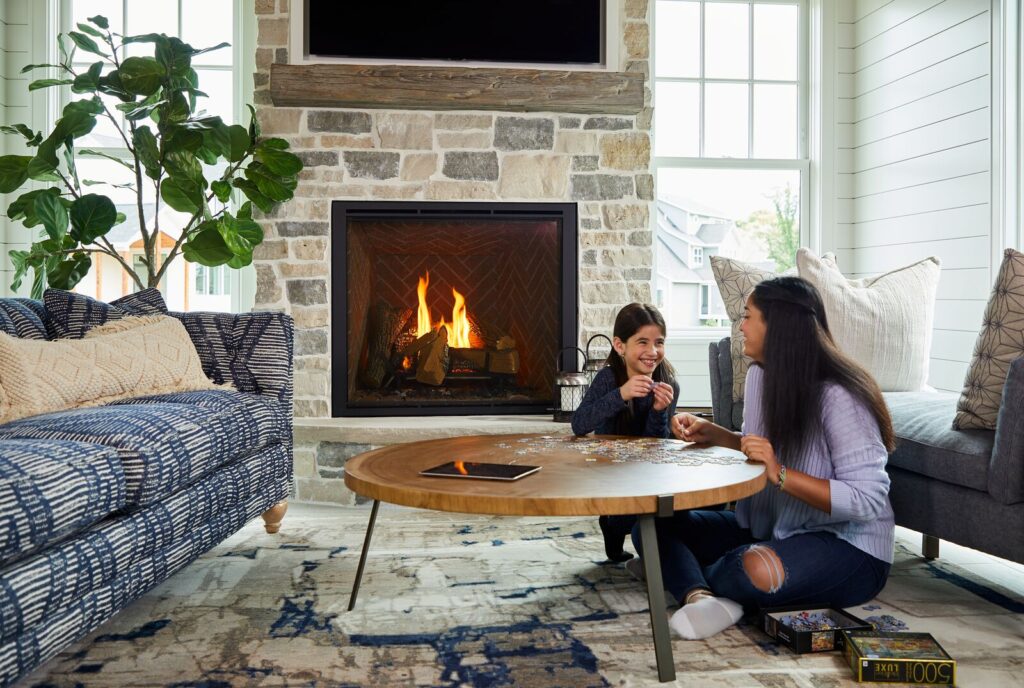
Mom & daughter sitting in front of a gas fireplace laughing, spending time together
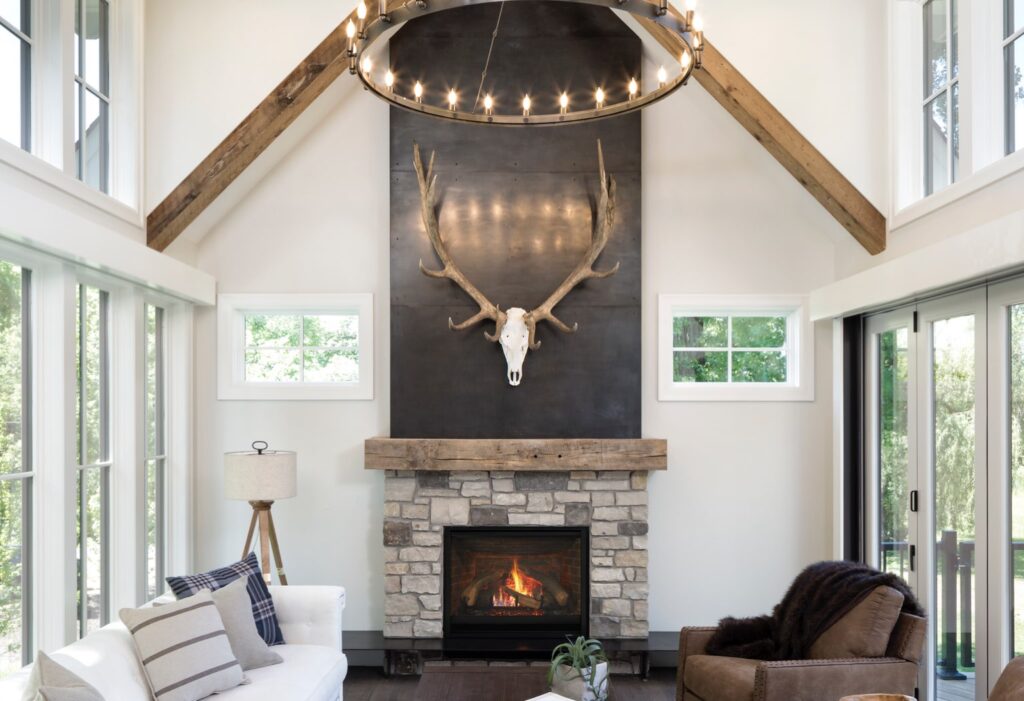
Modern farmhouse great room with classic gas fireplace in two-story hearth wall with windows on each side of the space.

Electric Fireplaces

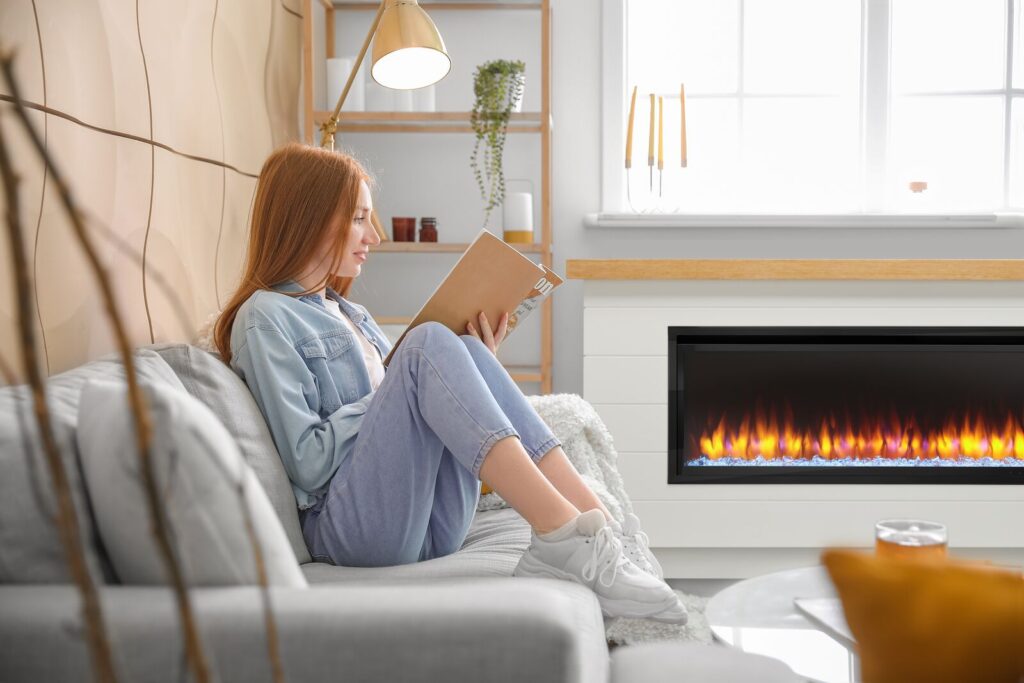
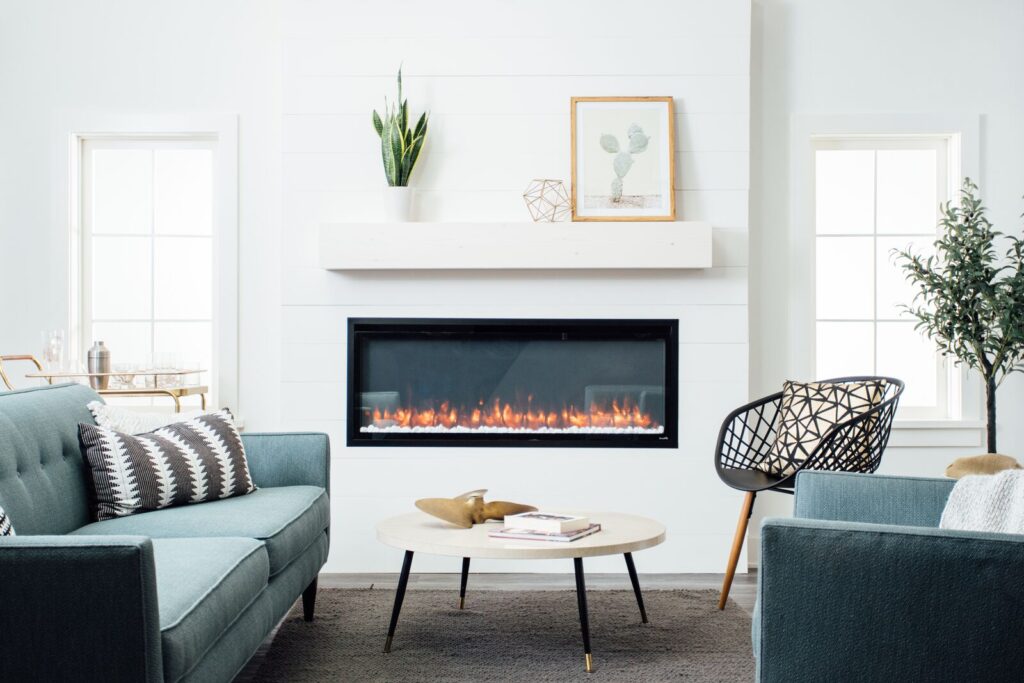
Plug-and-play units that use electricity to simulate flame and produce light heat. No chimney or venting required.

Learn more: “Our Fireplace Upgrade Companion

  • Best for: Apartments, condos, or rooms where you want a cozy look without major renovation.

  • Needs: Just an outlet.

  • Keep in mind: More about looks than serious heat.

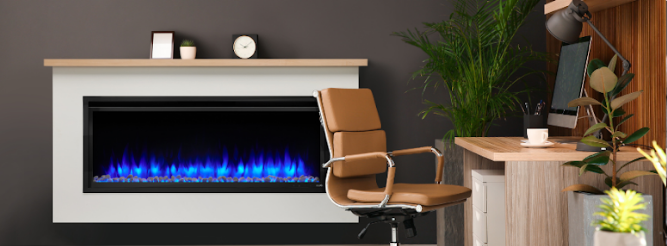
Linear electric fireplace by SimpliFire in a modern office
electric fireplace

Clearances & Hearth Protection

  • Wood: Typically 2″ to combustibles; mantel clearance ≥12″ unless tested otherwise.

  • Gas: Often 1″, but defer to manufacturer’s tested clearance specs.

  • Electric: Commonly zero-clearance.

Hearth Pads

  • Type I: Ember protection only.

  • Type II: Thermal protection (R ≥ 1.0). Calculate using: R = thickness ÷ k-factor.

gas logs

Chimney & Venting Essentials

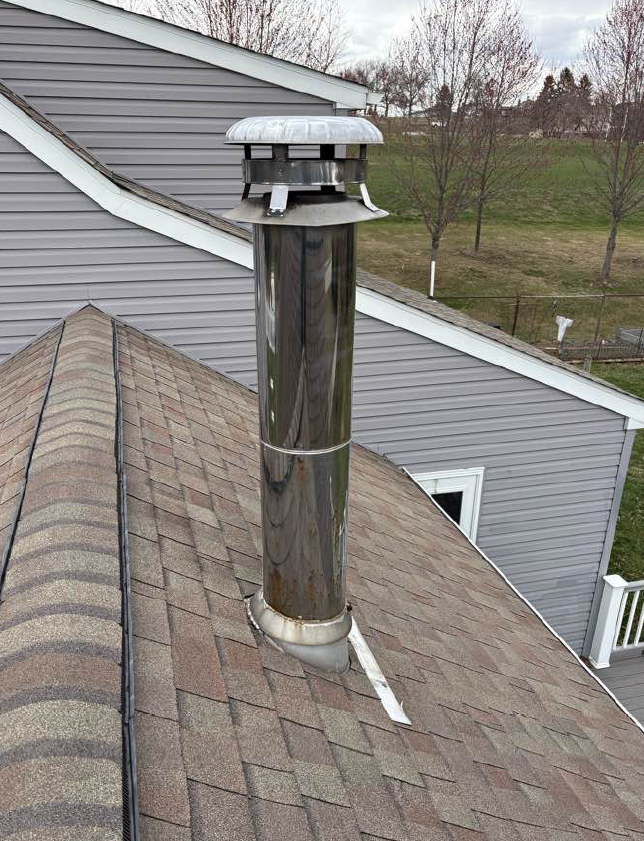
  • Wood: Double/triple wall, adhere to 10/2/3 rule. Use firestops and storm collars.

  • Gas: Use manufacturer-specific vent kits. Maintain rise, max run, and terminal clearance.

  • Access: NFPA 211 mandates cleanout and inspection access.

3-2-10 Rule for Chimney Height Example

Structural Requirements

Exterior Chase

  • Maintain all vent clearances.

  • Use fire-rated insulation and blocking.

  • Seal with flashing and storm collars.

Interior Chase

  • Improves draft stability.

  • Avoids exposure to ambient cold air.

  • Still requires firestop systems.

universal-chimney-sweep

Permits & Code Compliance

  • Wood & Gas: Building and mechanical permits required.

  • Electric: Typically electrical permit only.

  • All Systems: Must follow UL listings, NFPA 211, and IRC for framing, venting, and hearth construction.

electric fireplace

Combustion Air & Pressure Considerations

  • Wood: Outside Air Kit (OAK) required for most modern builds.

  • Gas: Direct vent units self-regulate.

  • Electric: Unaffected by combustion dynamics.

Watch out for competing exhaust systems—kitchen hoods, dryers, and HRVs can affect fireplace performance via negative pressure.

pre-fab fireplace with gas logs

Estimated Cost Breakdown

TypeApplianceVentingLabor/InstallTotal
Electric$400–$2,000N/A$300–$1,000$700–$3,000
Direct Vent Gas$2,000–$4,500$500–$1,200$2,000–$4,000$4,500–$9,700
Wood-Burning$3,500–$6,000$2,000–$4,500$2,500–$5,000$8,000–$15,500

Prices vary based on venting length, chase location, framing complexity, and access to electric/gas lines.

EPA Zero-Clearance Wood Fireplace
wood fireplace

Final Thoughts

Adding a fireplace to a home without one is entirely possible with correct planning, certified products, and adherence to codes. Wood, gas, or electric—each system comes with its own benefits and requirements. Work with certified professionals and ensure all installations meet UL/NFPA standards for safety and performance.

One Response