
How to Properly Use a Firewood Moisture Meter?
To use a moisture meter correctly and get an accurate reading, you must test the internal moisture of the wood, as the outside dries faster than the core.
- Split a Fresh Face: Do not test the outside of the log. Split a piece of firewood in half and test the freshly exposed surface immediately.
- Pin Placement: Align the pins parallel to the grain (longways with the wood fibers) rather than across them for the most consistent electrical conductivity reading.
- Application: Push the pins firmly into the center of the split face. If the wood is too hard to penetrate, try a different spot on the same split face, avoiding knots or bark.
- Reading Target: Properly seasoned firewood must have a moisture content of less than 20%.
What is the Ideal Moisture for Firewood?
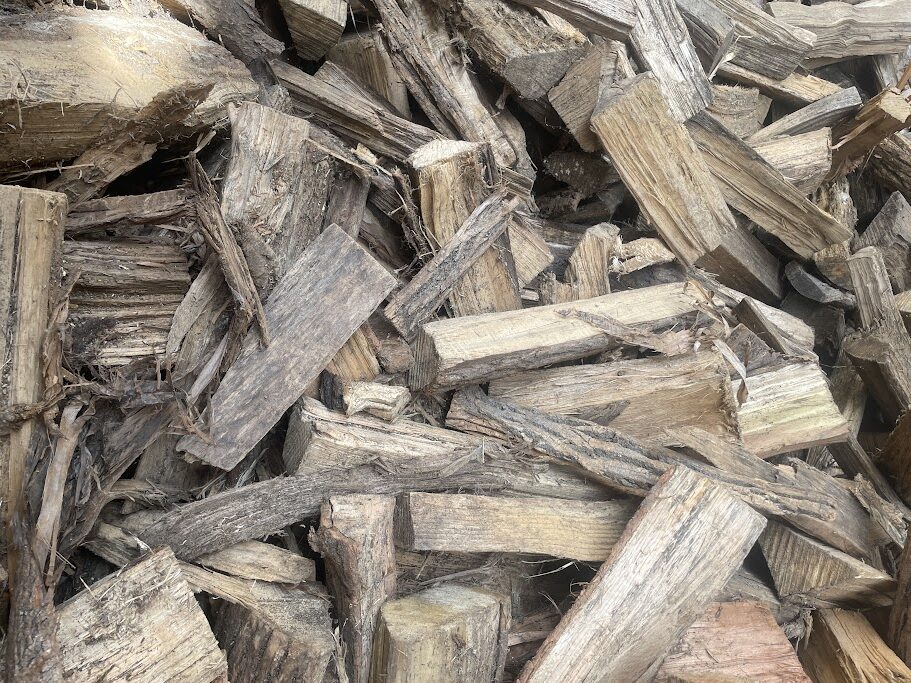
The ideal moisture content for firewood is 15% to 20%. Burning wood within this range ensures the highest heat output, the lowest emissions, and the safest operation of your appliance.
The Science of “The Sweet Spot”
- 20% Limit: Any wood above 20% is considered “green” or “wet.” At this level, the fire’s energy is wasted boiling off internal water rather than providing heat. This creates heavy creosote (tar) in your chimney, which is the primary cause of chimney fires.
- 15% Floor: While wood can be drier than 15%, very kiln-dried or “over-seasoned” wood burns too fast and too hot. This can lead to “over-firing,” which can warp the internal components of your stove or crack the firebricks.
- “Gold Standard”: For modern EPA-certified stoves, 18% is widely considered the perfect balance for a long, steady, and clean burn.
Moisture Meter Pins Won’t Go Into the Firewood?
- Check for Seasoning: Very dry hardwoods like Oak or Ironwood can be extremely dense and difficult to penetrate.
- Verify Pin Integrity: Ensure the pins aren’t bent or dull.
- Alternative Test: If the meter won’t penetrate, use the “bang test”—properly dry wood should sound hollow when struck together, whereas wet wood sounds like a dull thud.
What is the Best Favorite Firewood Moisture Meter?
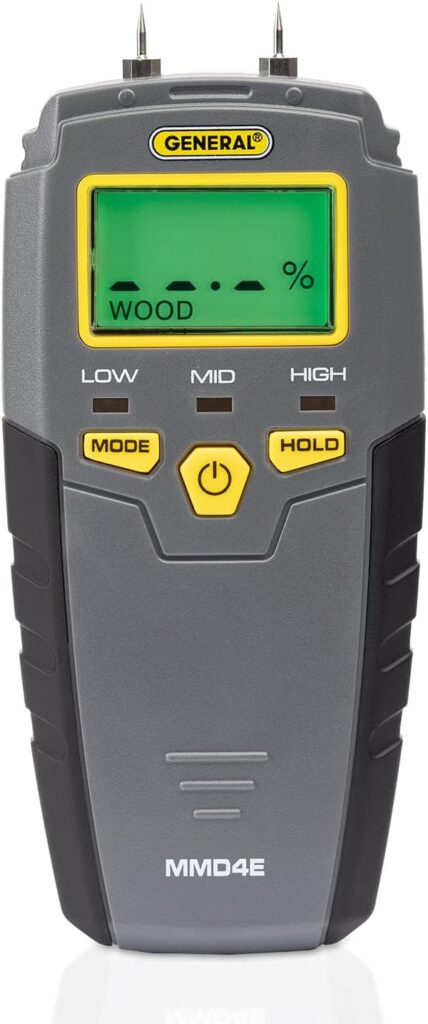
The General Tools MMD4E moisture meter is considered the “gold standard” for residential firewood users and hearth professionals because it balances durability, simplicity, and accuracy at a mid-range price point.
Why do we like the General Tools wood moisture meter?
- Rugged Build Quality: Unlike cheaper “no-name” brands that use thin, brittle pins, the MMD4E pins are designed for the high-impact stress of being pushed into hardwoods like Hickory and Oak.
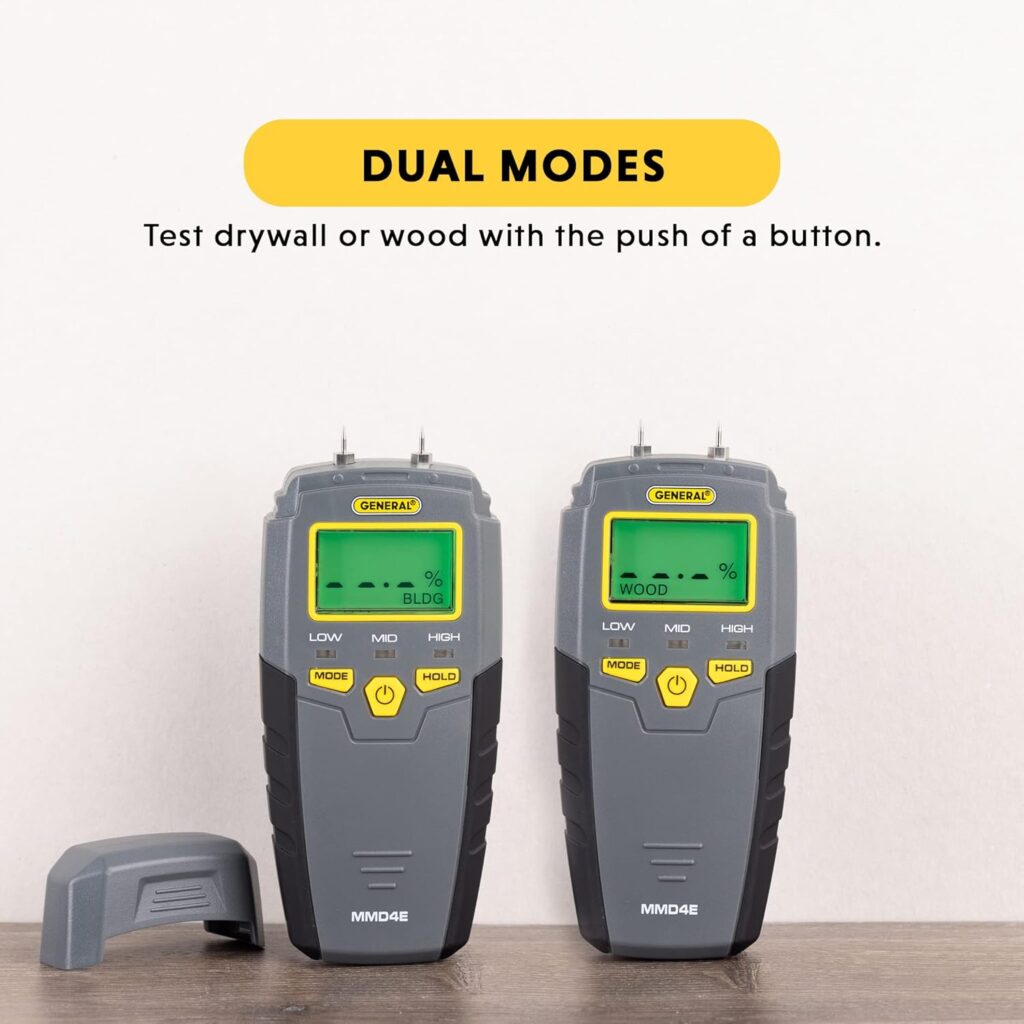
- Clear Visual Indicators: It doesn’t just give a number; it provides an Audible Alarm and a Three-Tier LCD Graph (Low, Medium, High). This helps the user immediately realize if wood is “Safe” or “Danger” without needing to consult a manual every time.
- Dual-Use Accuracy: It is calibrated specifically for wood and building materials (drywall/masonry). By measuring electrical resistance between the pins, it provides a consistent reading that has been verified against professional-grade laboratory equipment.
- Longevity: The pins are replaceable. In cheaper models, if a pin snaps, the unit is trash. With the MMD4E, you simply swap the pins and keep working.
| Feature | Benefit |
| Replacement Pins | Extends tool life; no need to buy a new unit if pins bend. |
| Measurement Range | 5% to 50% (Covers the entire seasoning spectrum). |
| Auto Power-Off | Saves battery—critical for a tool that sits in a cold wood shed. |
| Data Hold | Allows you to freeze the reading if you’re testing in a dark or awkward spot. |
Safety & Value Impact of having a Firewood Moisture Meter
Using this specific meter protects the customer’s investment. A $45 tool prevents a $250 chimney cleaning or a $5,000 chimney fire. It removes the “guesswork” of seasoning, ensuring that every piece of wood burned contributes to heat rather than creosote.