






There is a specific kind of homeowner who chooses pellet heat: someone who values the carbon-neutral power of real wood but demands the precision of modern technology. Pellet stoves and inserts represent the “Smart Home” evolution of the hearth industry. By using wood pellets, you get an incredibly consistent fire that stays exactly as hot as your thermostat dictates, all while keeping your hands clean and your firewood stack non-existent.
However, moving to pellets is a shift in mindset. You aren’t just building a fire; you are operating a high-performance mechanical appliance. From the whisper of the convection fans to the logic of the vacuum switches and auger motors, there is a lot happening behind the glass to ensure a 2026-level of efficiency. Whether you are trying to slash a rising electric bill or simply want a primary heat source that you only have to “load” once a day, pellet technology is the most logical bridge between traditional grit and modern grit-free living.
This guide serves as your comprehensive technical roadmap. We’ve stripped away the marketing jargon to give you the raw data on pellet heating—from the “Diary” of daily ownership to the hard numbers of installation and fuel quality. By the end of this page, you will understand the mechanical soul of these units, the true cost of bagged fuel, and how to select a professional installer who understands the unique venting requirements of a high-efficiency pellet system.
| Feature | Wood (Insert/Stove) | Pellet (Insert/Stove) | Gas (Insert/Fireplace) |
| All-In Install Cost | $8,000 – $11,000 | $6,800 – $9,800 | $7,200 – $16,200 |
| Fuel Effort | High-Very High (Hauling/Stacking/Loading) | Medium-High (Lifting 40lb bags/Hopper) | Low (Remote control/Instant) |
| Heat Type | Intense Radiant (Deep heat you feel in your bones) | Forced Air (Consistent “furnace” style heat) | Convection/Radiant (Gentle, steady warmth) |
| Maintenance | Annual Sweep (Every 2 cords of wood) | Weekly Ash Clean & Annual Service | Annual Service (Internal cleaning/checks) |
| Biggest Pro | Reliability. Works during power outages; classic ambiance. | Automation. Set a schedule and walk away. | Convenience. For direct vent: zero mess, no odor, instant fire. |
| Largest Con | Labor. Physical work required to manage fuel and fire. | Electricity. Requires power; fan noise can be annoying. | Cost & Customization. Many models have non-changeable logs/brick. |
Pellet heating is for the homeowner who wants the “Soul” of a wood fire but the “Brain” of a modern appliance. It’s a shift from being a manual laborer to being a system manager. You aren’t just burning wood; you’re utilizing high-density biomass to create a consistent, thermostatically controlled environment.
| Feature | Freestanding Pellet Stove | Pellet Fireplace Insert |
|---|---|---|
| Best Application | Basements, New Additions, Open Floor Plans | Converting a drafty Masonry Fireplace |
| Venting Style | Direct-Vent (Horizontal through wall) | Vertical Liner (Through existing chimney) |
| Hopper Size | Large (40 – 80 lbs) – Longer run times | Compact (40 – 60 lbs) – Space limited |
| Maintenance Access | Easy (360° access to all panels) | Requires “Pull-Out” tracks for major service |
| The “Big Pro” | Can be placed almost anywhere in the home | Zero-footprint; uses existing hearth space |
| The “Big Con” | Takes up living room floor space | Refilling the hopper requires more precision |
DID YOU KNOW? A single 40lb bag of premium pellets can produce as much heat as nearly 50 pieces of traditional firewood, but takes up 80% less storage space.
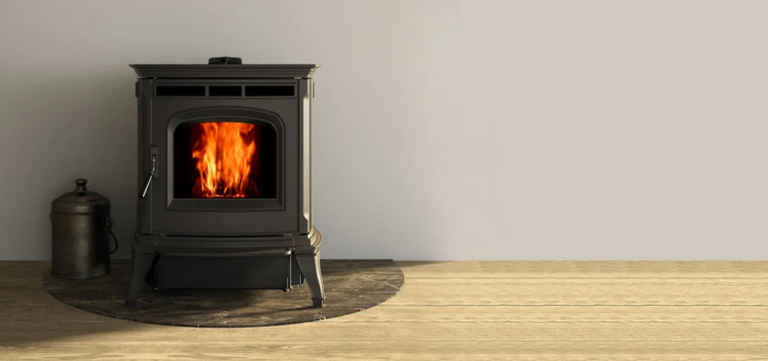
Unlike a traditional chimney that requires a massive masonry footprint, pellet stoves use active “Power Venting.” Because an internal fan forces the exhaust out, we can install these units in places a wood stove could never go—including basements, tight corners, and even bedrooms.
The “Price” of a pellet stove isn’t just the sticker on the glass; it’s the ROI of zone heating. By heating the room you actually live in, you can drop your whole-home thermostat by 10 degrees. In a world of volatile energy prices, pellets offer a stable, predictable cost-per-BTU.
THE PELLET ROI: Most homeowners who switch to a high-efficiency pellet insert as their primary heat source see a “break-even” on their investment within 3 to 5 heating seasons.
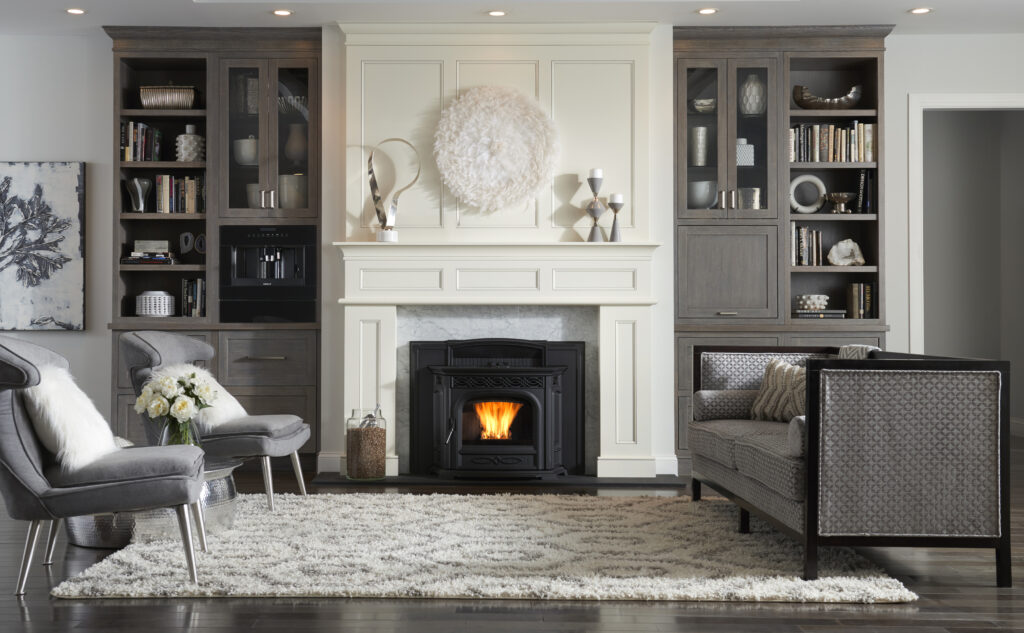
We don’t just sell these; we live with them. Choosing a unit is about balancing “Hopper Capacity” (how long it runs before you refill) with “Aesthetic Fit.” Whether you want a traditional cast-iron look or a sleek, modern glass tower, there is a unit engineered for your square footage.
A pellet stove is a precision machine with moving parts—motors, fans, and sensors. While daily maintenance is as simple as a 2-minute “scrape and swipe,” annual professional service is the secret to a 20-year lifespan. It’s the difference between a reliable heater and a winter headache.
Browse our Fireplace Manufacturer List for design inspiration. Then, head to the Fireplace Directory to find a certified gas specialist near you or check out National Fireplace Institute Find a Pro.