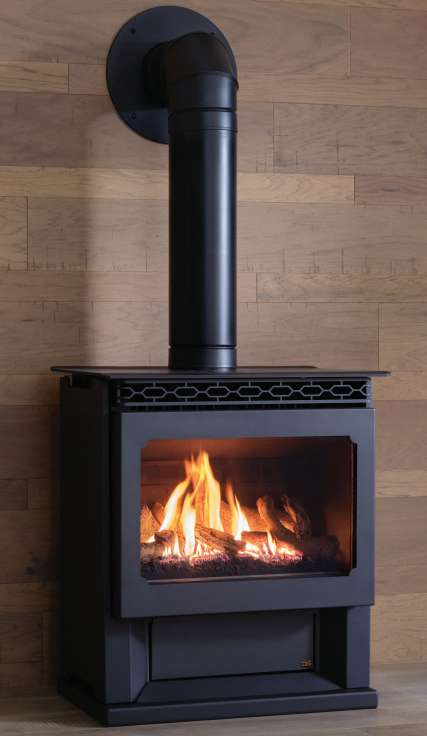
Basics | What is Pellet Heating?
Pellet heating is for the homeowner who wants the “Soul” of a wood fire but the “Brain” of a modern appliance – It’s a shift from being a manual laborer to being a system manager. You aren’t just burning wood; you’re utilizing high-density biomass to create a consistent, thermostatically controlled environment.
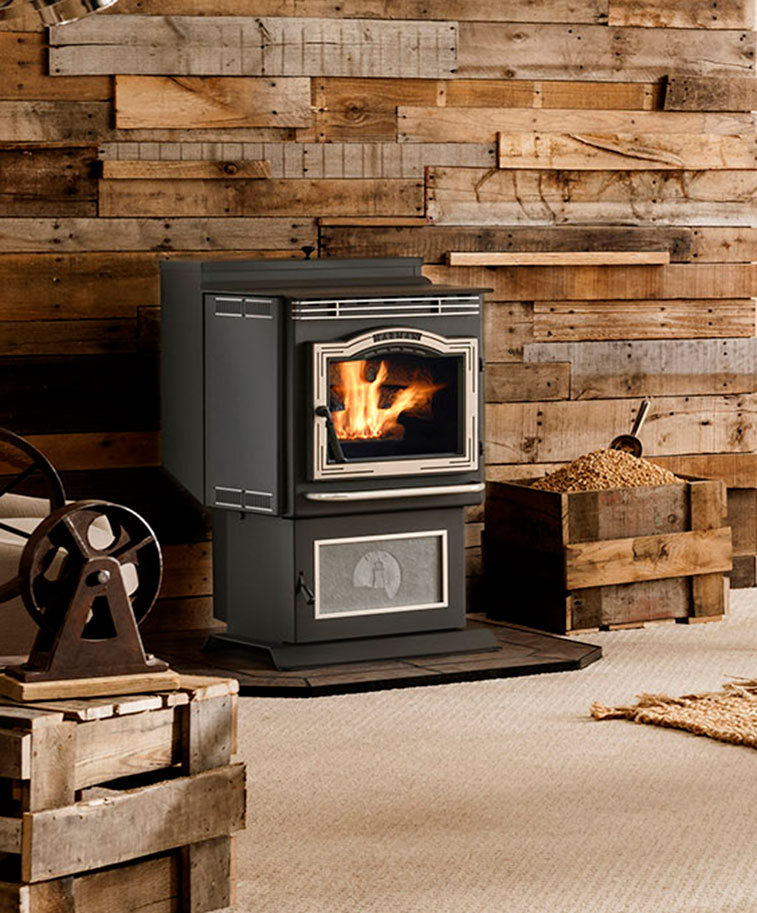
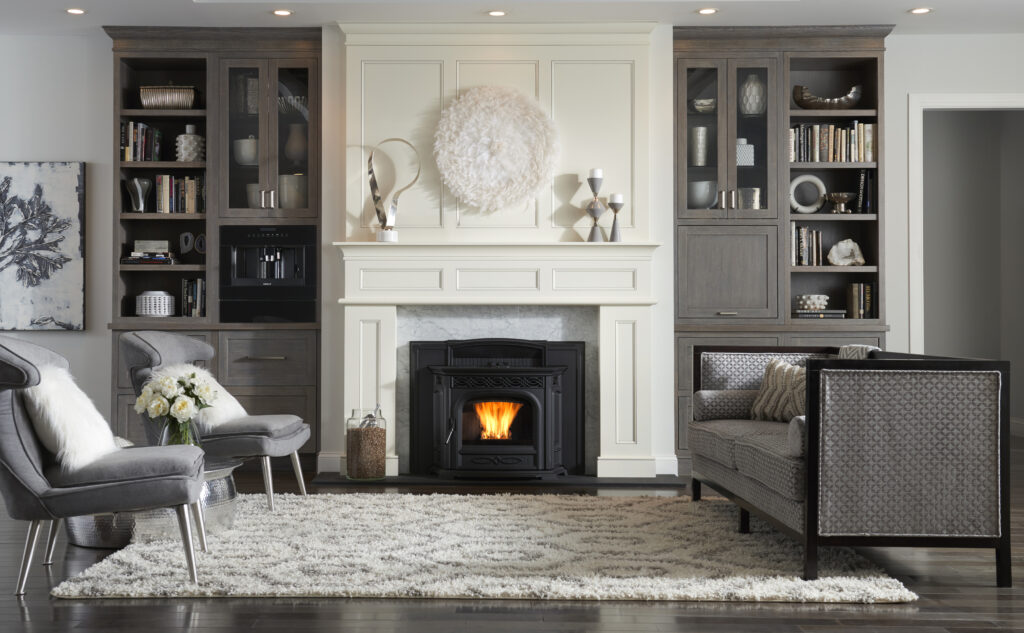
Pellet Stoves vs. Pellet Fireplace Inserts
| Feature |
Freestanding Pellet Stove |
Pellet Fireplace Insert |
| Best Application |
Basements, New Additions, Open Floor Plans |
Converting a drafty Masonry Fireplace |
| Venting Style |
Direct-Vent (Horizontal through wall) |
Vertical Liner (Through existing chimney) |
| Hopper Size |
Large (40 – 80 lbs) – Longer run times |
Compact (40 – 60 lbs) – Space limited |
| Maintenance Access |
Easy (360° access to all panels) |
Requires “Pull-Out” tracks for major service |
| The “Big Pro” |
Can be placed almost anywhere in the home |
Zero-footprint; uses existing hearth space |
| The “Big Con” |
Takes up living room floor space |
Refilling the hopper requires more precision |
DID YOU KNOW? A single 40lb bag of premium pellets can produce as much heat as nearly 50 pieces of traditional firewood, but takes up 80% less storage space.
The Project | Installation & Planning
Unlike a traditional chimney that requires a massive masonry footprint, pellet stoves use active “Power Venting.” Because an internal fan forces the exhaust out, we can install these units in places a wood stove could never go—including basements, tight corners, and even bedrooms.
The Investment | Costs & Efficiency
The “Price” of a pellet stove isn’t just the sticker on the glass; it’s the ROI of zone heating. By heating the room you actually live in, you can drop your whole-home thermostat by 10 degrees. In a world of volatile energy prices, pellets offer a stable, predictable cost-per-BTU.
THE PELLET ROI: Most homeowners who switch to a high-efficiency pellet insert as their primary heat source see a “break-even” on their investment within 3 to 5 heating seasons.
The Reviews | Choosing Your Pellet Unit
We don’t just sell these; we live with them. Choosing a unit is about balancing “Hopper Capacity” (how long it runs before you refill) with “Aesthetic Fit.” Whether you want a traditional cast-iron look or a sleek, modern glass tower, there is a unit engineered for your square footage.
Ownership | Service & Longevity
A pellet stove is a precision machine with moving parts—motors, fans, and sensors. While daily maintenance is as simple as a 2-minute “scrape and swipe,” annual professional service is the secret to a 20-year lifespan. It’s the difference between a reliable heater and a winter headache.