What is Clearance to Combustibles in the Hearth Industry?
More air space creates more insulation increasing the overall safety of your installation. Clearance to combustibles is the required minimum air space between heat-producing appliances such as wood stoves, fireplaces, and chimney pipes, and any material that can burn. This distance protects wood framing, drywall, flooring, cabinets, trim, and furniture from overheating and igniting.
Why Clearance Requirements Matter?
When it comes to fire, safety comes first! Even when a surface does not touch the appliance, heat still moves. It travels through three types of heat transfer: Conduction: Heat moves directly through a solid material. Convection: Heat rises and circulates with the air. Radiation: Heat travels outward as infrared energy. If clearance is not maintained, nearby materials can dry, char, and eventually ignite from long-term low-grade heating.
Where Do Fireplace Clearance Requirements Come From?
- Manufacturer Listed Instructions (Installation Manual)
- Primary source for modern appliances.
- Always follow the appliance manual first.
- Tested and listed clearances override all other standards.
- Where to Find Your Fireplace’s Owner’s Manual?
- Vent or Chimney Manufacturer Info
- Important when installing Class A chimney systems and venting systems.
- Each pipe brand and model has its own listed clearance.
- NFPA 211 Standards
- Used when there is no manufacturer listing.
- Applies to masonry chimneys.
- Applies to unlisted and vintage wood stoves.
- Provides default clearance rules.
- What is NFPA 211?
What is Pyrolysis?
Pyrolysis is when wood slowly “cooks” from nearby heat and eventually becomes so fragile and altered that it can catch fire far more easily. This is one of the main reasons we strictly maintain clearance to combustibles. Even a wall that never touches the stove can ignite years later if pyrolysis has occurred.
Most common causes of pyrolysis we have seen in our 40+ years of hearth experience:
- Wood stove installed too close to a wall
- Stovepipe passing too close to framing
- Chimney penetrating floors or ceilings without proper clearance
- Mantels or trim above fireplaces exposed to high heat
- Improper hearth installation with wood form still in place around masonry below fireplace
- Repeated chimney overheating from creosote fires caused by unseasoned firewood
What Areas Require Clearance to Combustibles?
- Appliance Clearances
- Sides and back of wood stoves and inserts
- Front clearances for ember protection
- Top clearance to ceilings and overhead materials
- Pipe and Chimney Clearances
- Stovepipe or connector pipe
- Chimney passing through walls, floors, and attics
- Roof penetration
- Framing in chase enclosures
- Floor and Wall Protection
- Hearth pads
- Wall shields and heat-resistant panels
- Mantels and decorative trim
- TV recesses and built-in cabinetry
Common Combustible Materials We Run Into When Installing Fireplaces
- Wood framing and studs
- Floor joists and subfloor
- OSB and plywood
- Standard drywall
- Wood trim and molding
- Hardwood and laminate flooring
- Cabinets and built-ins
- Mantels and decorative woodwork
Clearance Requirements for Different Hearth Appliances
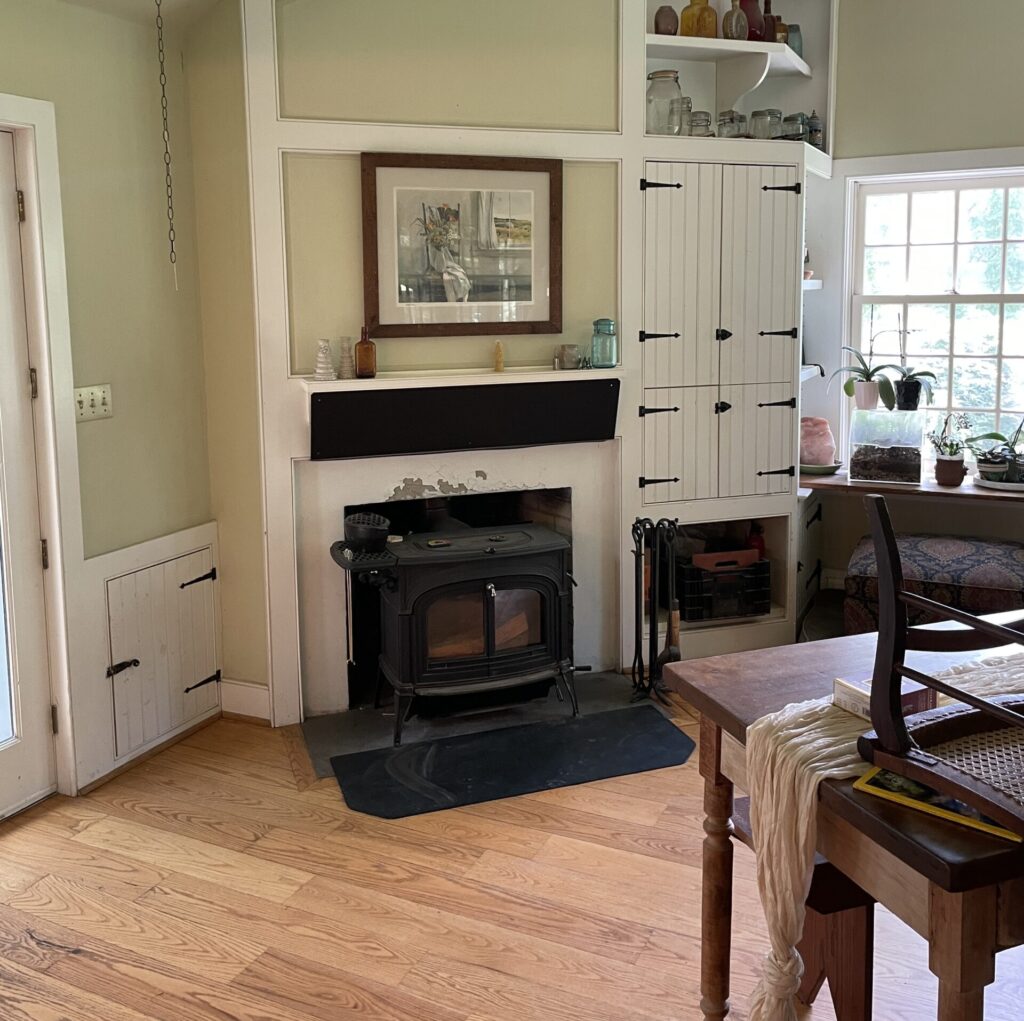
- Wood Stoves
- Typical unprotected clearance: 36 inches
- Reduced protected clearance: 12 to 18 inches
- Stovepipe clearance: usually 18 inches unless the pipe is listed for less
- Fireplace Inserts
- Follow listed clearances exactly according to installation manual
- Watch mantel and surround clearances
- Check required hearth extension depth
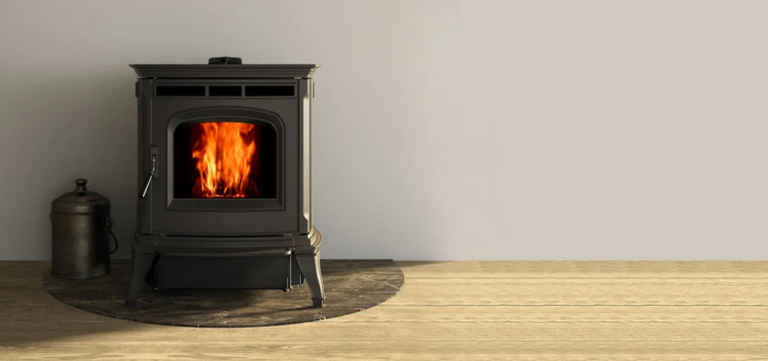
- Pellet Stoves
- Often, less strict clearance requirements
- Must follow listed distances according to install manual
- Pellet vent pipe has model-specific clearances
Installation Best Practices to Consider for Your Fireplace Project:
Clearance to combustibles means keeping hot appliances and venting far enough away from materials that can burn. The air space prevents slow overheating and protects the home from fire.
- Read the entire installation manual first
- Begin with the end in mind
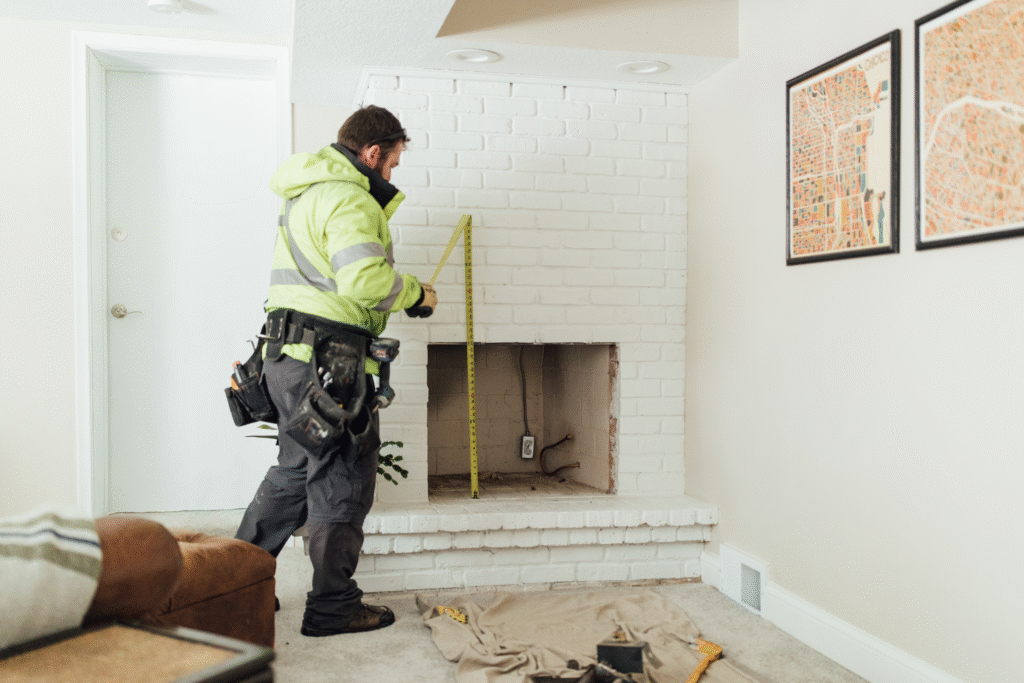
- Measure every clearance accurately
- Measure twice, cut once
- Use listed and approved components only
- OEM is the only way to go, do not cut corners
- Hire certified installers for complex projects
- Find and NFI Certified Pro
- Get a Level 2 Chimney Inspection before changing fuel types or heating output
- Never compromise clearances in the manual
Fireplace Safety and You
Learn more about fireplaces on our blog:
- Best Method to Babyproof a Gas Fireplace or Wood Stove?
- How to Safely Replace Wood Stove Rope Gasket?
- Why Choose an NFI Pro? Find Quality Gas Fireplace Service!
- What is the Average Cost of Chimney Sweeping?
- What is NFI Certified? (The Top Safety Standard for Fireplaces)
- What is NFPA 211? A Standard to Keep Your Fireplace Install Safe
- Answering Your Most Frequently Asked Fireplace Questions
Consult additional information outside of just reading one piece of information, like this guide! Please seek professional opinions and do not take our word as gospel. Every fireplace project is unique and deserves the insight of a qualified professional. At The Stove Shop Fireplace Experts in Phoenixville, PA our mission is to help you stay warm and save money. If we can be of use to you at all, please contact us today!