Can You Mount a TV Above a Fireplace?
Expert Safety Guide and Best Fireplace Options
Thinking about putting a TV above your fireplace? It can work, but only if you plan it right. Not every fireplace setup is safe for electronics, and ignoring the risks can damage your TV or worse.
Let’s walk through what you need to know.
Is It Safe to Mount a TV Above a Fireplace?
Yes, but only if your fireplace system is designed with that setup in mind. You need the right type of fireplace, a solid heat management plan, and a precise installation.
TV manufacturers generally recommend keeping wall temperatures below 100°F in the mounting zone. If you can’t measure and maintain that temperature, it’s not safe to install a TV there.
Important: Always check the owner’s and installation manual for your specific fireplace. This guide is for general education only. The Stove Shop isn’t responsible for damage caused by improper installs.
Why Fireplace TV Installs Often Fail
The Heat Problem
Heat naturally rises, and if it’s not redirected, it moves straight into the wall above your fireplace. That’s where your TV would go, and that can lead to:
Wall temperatures over 100°F
Shortened TV lifespan
Warped wall materials
Poor picture and sound performance
Clearance and Building Codes
According to NFPA 211, all fireplaces require minimum clearances. TVs aren’t flammable, but they’re sensitive to heat. Your wall needs to be treated like a protected zone, especially with high-output fireplaces. Make sure your setup meets both building codes and the manufacturer’s specs.
Best Fireplace Types for Mounting a TV Above
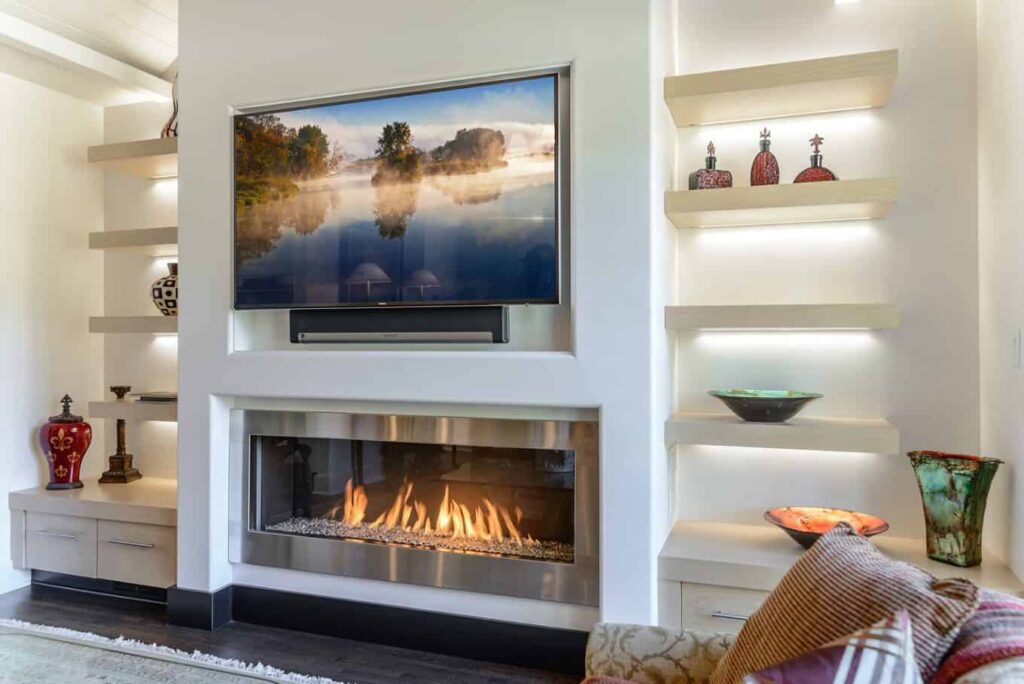
1. Direct Vent Gas Fireplaces (Best Option)
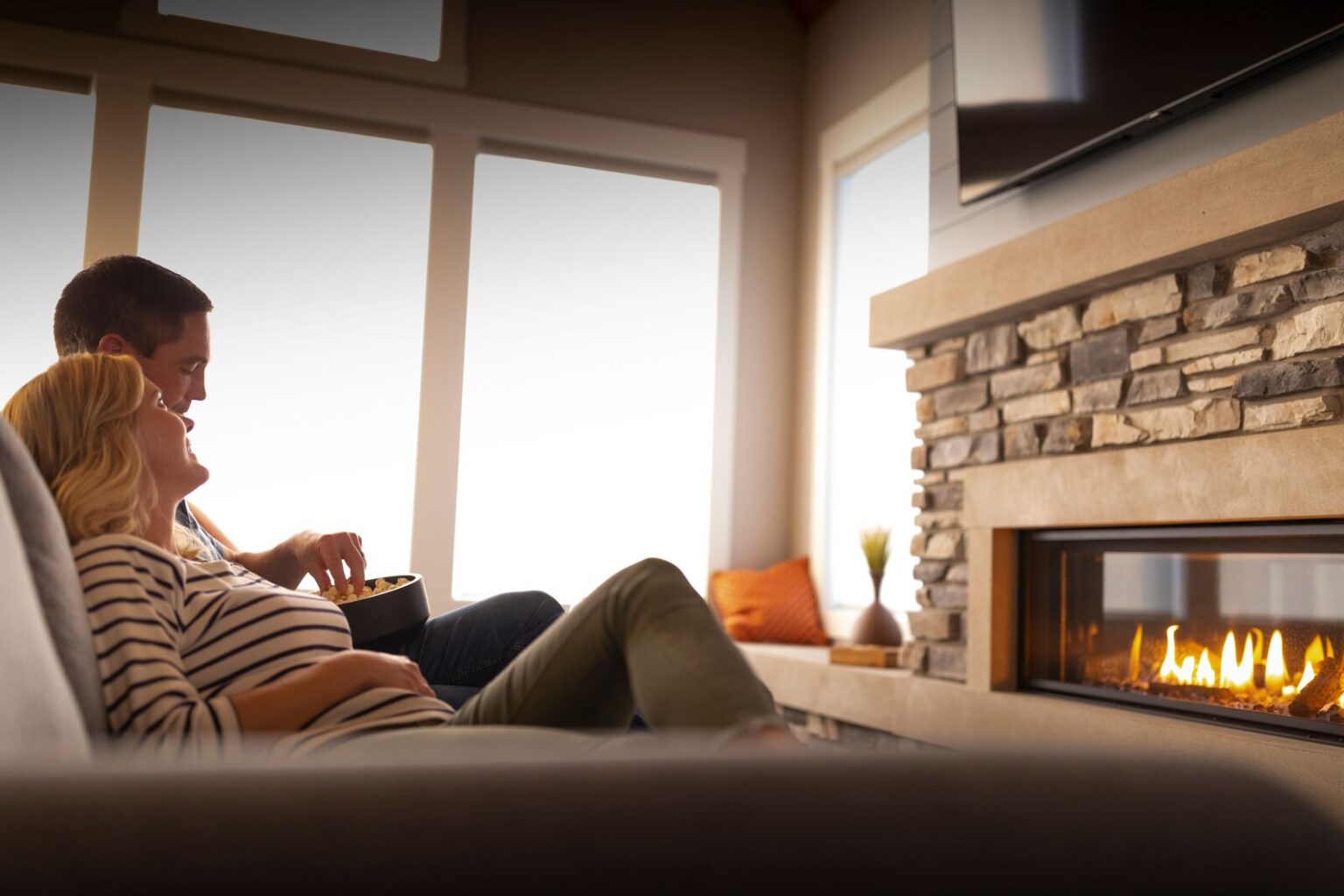
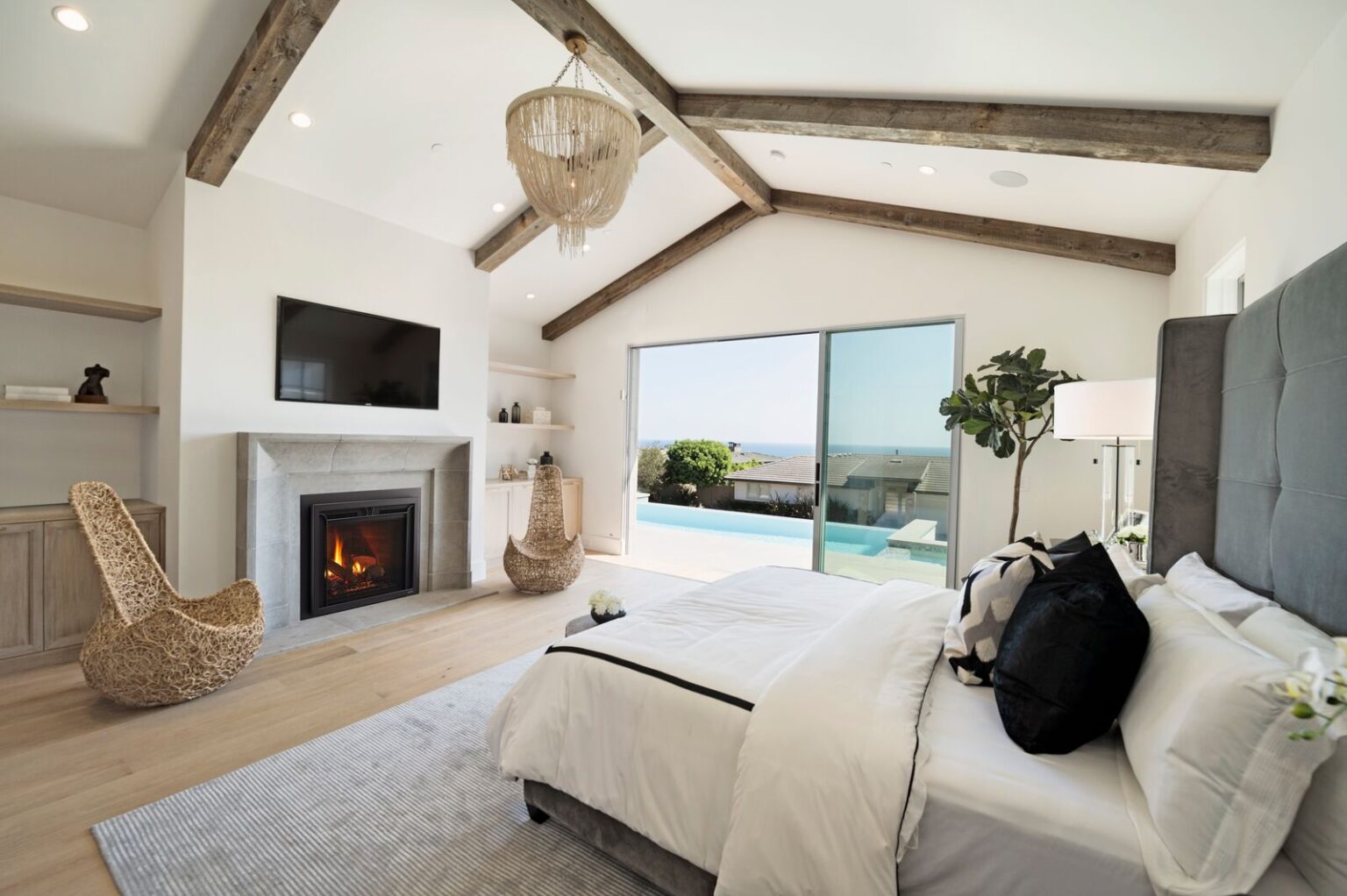
These fireplaces are sealed behind glass and vent outdoors. Many models come with heat management systems that push warm air away from the TV area and into other parts of your home.
Gas fireplaces give you real heat, clean design, and a wall ready for electronics.
Top Gas Fireplaces for a TV Wall:
Heat & Glo Primo II Series
Frameless modern design with high-output performance and PowerFlow heat management compatibility.Heat & Glo 8K Series
Luxury clean-face design with optional Passive Heat and Heat-Zone technology. Timeless look.Heat & Glo SlimLine Series
Compact depth for tight installs, compatible with Heat-Zone systems for safe TV use above. Thin design makes for a potentially less invasive install.
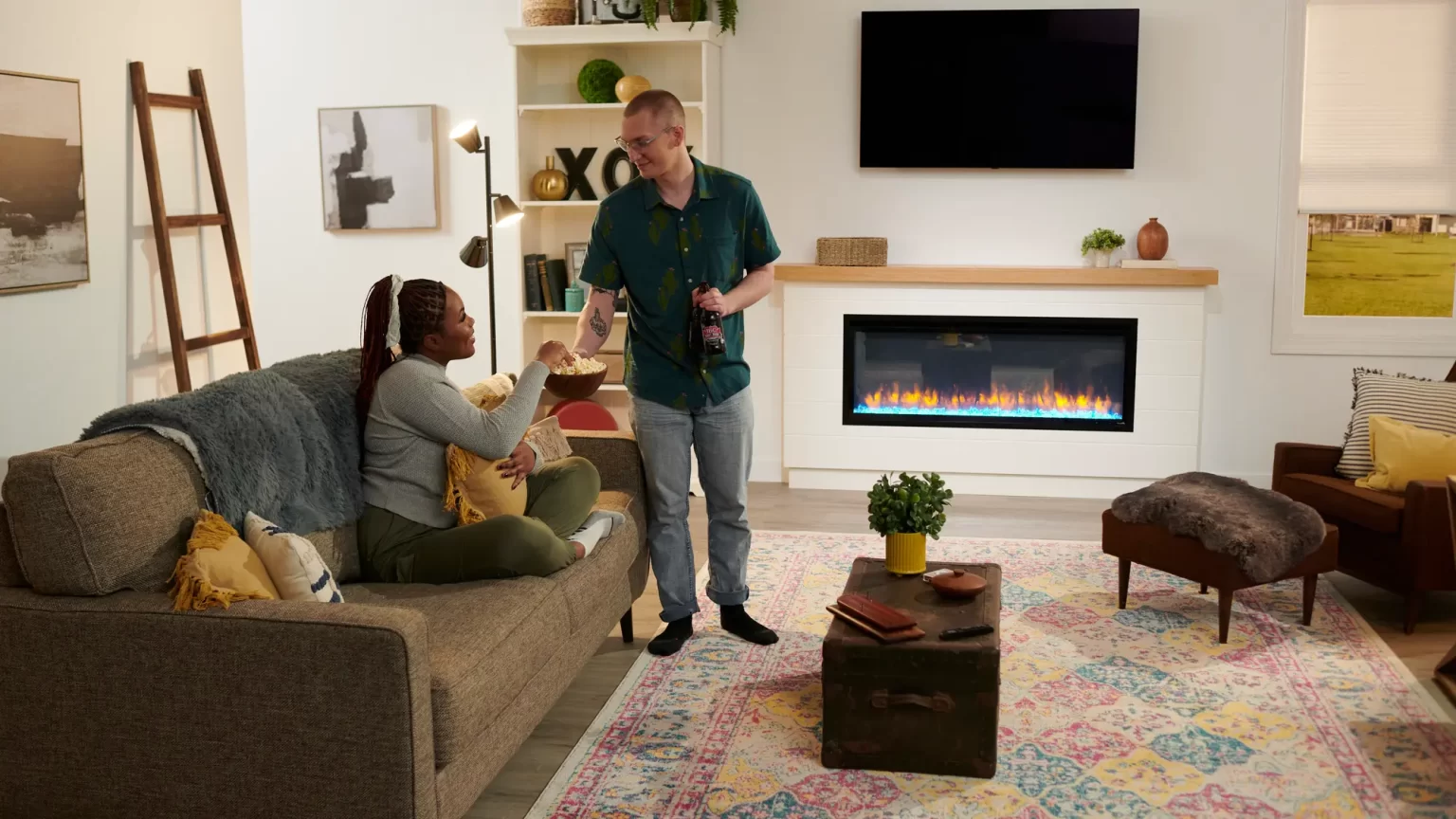
2. Electric Fireplaces (Safer, Less Heat)
Electric fireplaces produce far less heat and are usually safe for mounting a TV above. They don’t heat a room like gas models but they’re great for ambiance.
Measure twice when recessing electric fireplaces into tight framing!
Top Models:
SimpliFire Allusion Platinum Electric Fireplace
Fully recessed, large viewing area, excellent flame realism, multiple media options.SimpliFire Triton Electric Fireplace
Wall-mounted or recessed installation, versatile aesthetics, ideal for media walls.Dimplex Electric Fireplaces
Wide range of styles and sizes, safe for TV installations, reliable flame effect technology.
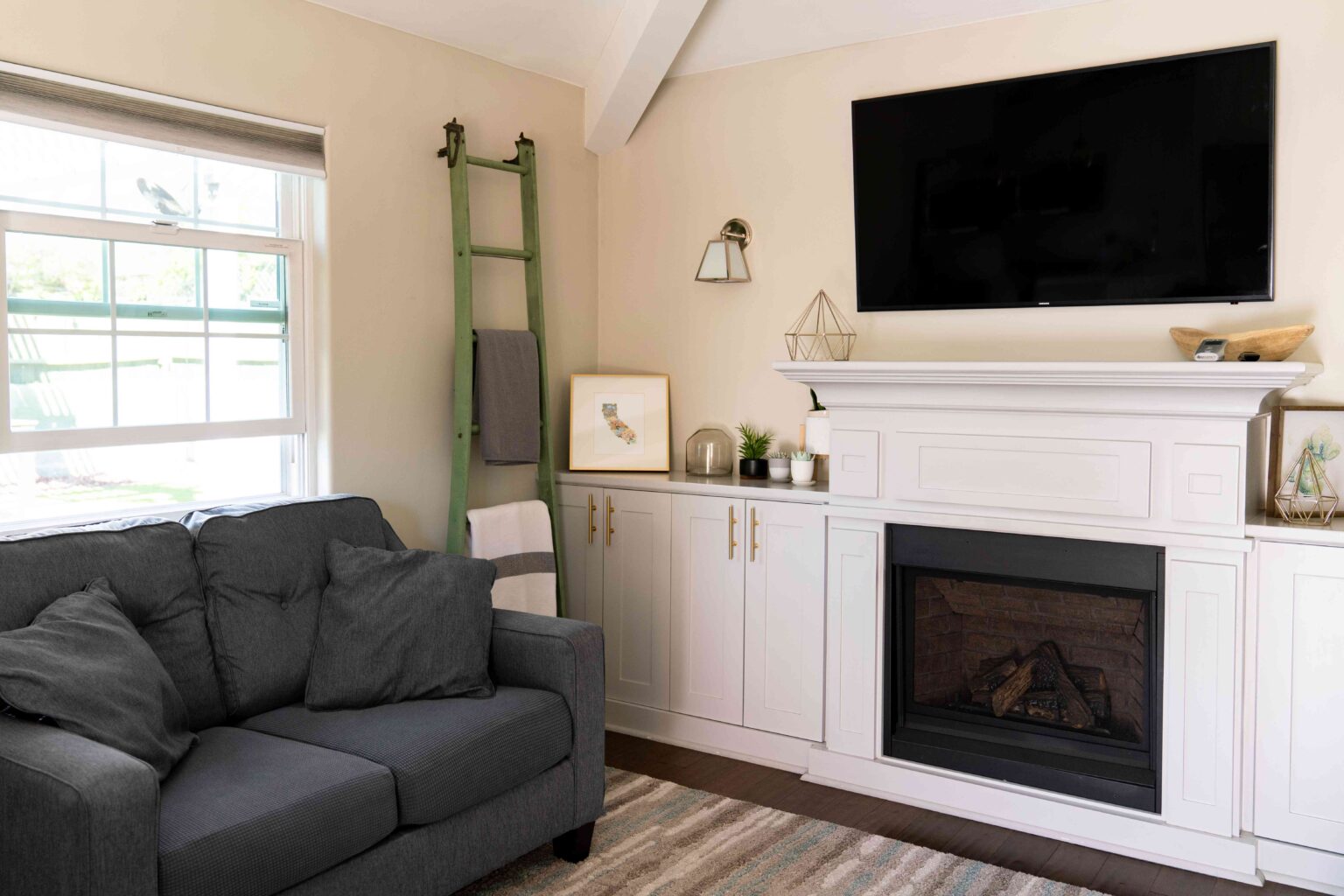
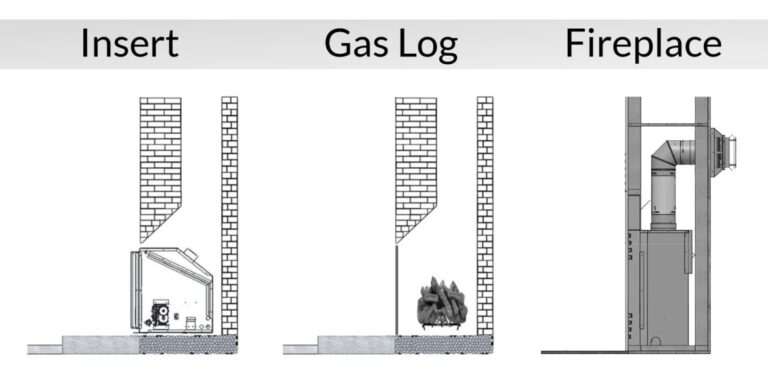
3. Gas Fireplace Inserts (Use with Caution)
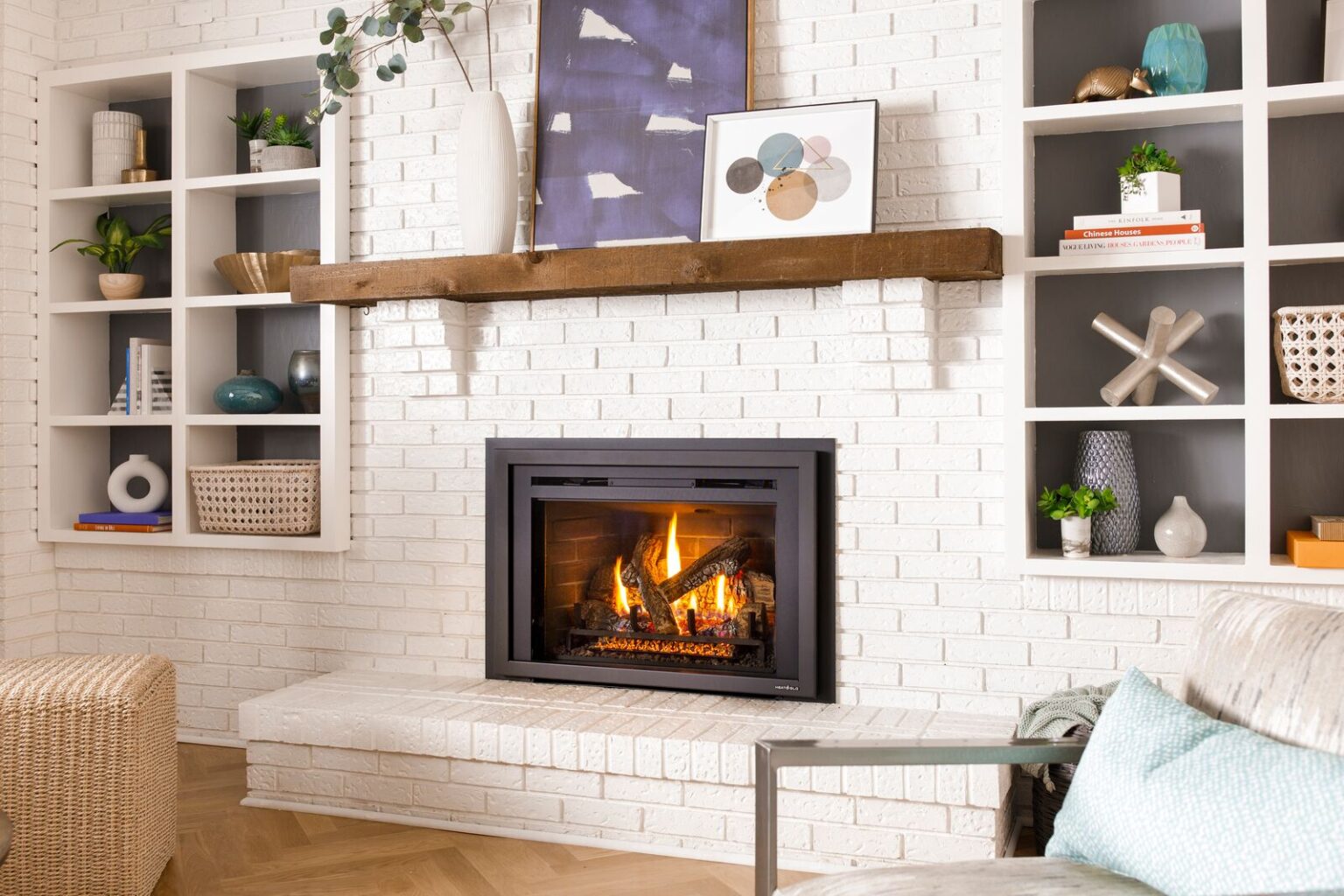
Inserts are placed inside existing masonry fireplaces. Even with sealed designs, they often trap heat in the wall, making the area above unsafe for a TV.
TV Install Only If:
You use a deep mantel with a mantel made of non-combustible material
You install deflectors or heat redistribution systems
Wall surface temperatures are tested and remain below 100°F
Key Safety Requirements
Heat Management Systems
Heat-Zone: Ducts heated air to remote registers
PowerFlow: Active airflow system for maximum redirection
Deflector Shields: Passive mantel or barrier that breaks heat path
Wall Temperature Control
Max wall temp: 100°F
Use a digital IR thermometer
Test during sustained high-output burn
Re-test after full system install
Proper Installation
Mantels: Must meet or exceed clearance specs and deflect heat
Wiring: Use conduit and recessed boxes; keep all wiring away from warm zones
Installers: Use certified professionals for gas, venting, and electrical work
Step-by-Step Guide
Use our Fireplace Upgrade Companion to plan your project
Phase 1: Design
-
Choose a fireplace based on heat output and room use
-
Calculate clearances from install manual and NFPA211
-
Integrate heat management from the beginning if needed
-
Select a mantel with tested deflection properties
Phase 2: Installation
-
Install the fireplace based on installation manual
-
Add heat redirection systems
-
Set up proper wiring chases and electrical boxes
-
Test wall temps before TV goes up
Phase 3: Testing
-
Run fireplace at full output
-
Measure wall temps in real time
-
Document test results
-
Only proceed with mounting if all zones stay under 100°F
Common Mistakes to Avoid
-
Skipping heat deflection systems
-
Ignoring manufacturer clearances
-
Installing the wrong fireplace for the layout – measure twice, cut once
-
Routing cables through hot zones
-
Mounting the TV before confirming wall temperatures
Cost Breakdown
Use our Fuel Cost Guide for Pennsylvania to estimate operating costs
Direct Vent Gas Fireplace Setup
Fireplace: $1,500–$4,000
Installation: $2,000–$4,000
Heat management: $500–$1,500
Total: $4,000–$9,500
Electric Fireplace Setup
Fireplace: $500–$2,500
Installation: $500–$1,500
Electrical: $300–$800
Total: $1,300–$4,800
Frequently Asked Questions
How hot does the wall get above a fireplace?
Traditional wood and older gas models can push wall temps to 150°F or higher. Direct vent units with heat redirection often keep temps under 100°F.
What’s the safe distance between TV and fireplace?
There is no universal answer. Clearance depends on the unit and setup. Always use wall temperature as your decision point, not inches.
Can I use any TV?
Not without managing heat. Even high-temp TVs have limits. Proper fireplace selection and heat control are more important than TV specs.
Do electric fireplaces get hot enough to damage TVs?
Generally no, but surface temps can exceed safe levels in enclosed framing. Always verify with the manufacturer.
Final Thoughts
A fireplace and TV wall can be a beautiful and functional centerpiece, but it only works when built with heat and electronics in mind. Direct vent gas fireplaces offer the best mix of aesthetics, comfort, and safety. Electric units are safe, but less effective for heating. Gas inserts carry higher risk and require cautious planning.
Thinking about upgrading your old fireplace? Start here
Always start with the owner’s manual. Test before you mount. Work with professionals who follow NFPA 211 and manufacturer specs. Your fireplace should warm the room, not burn out your electronics.