facebook pixel

Why Fireplace Glass Gets Black?

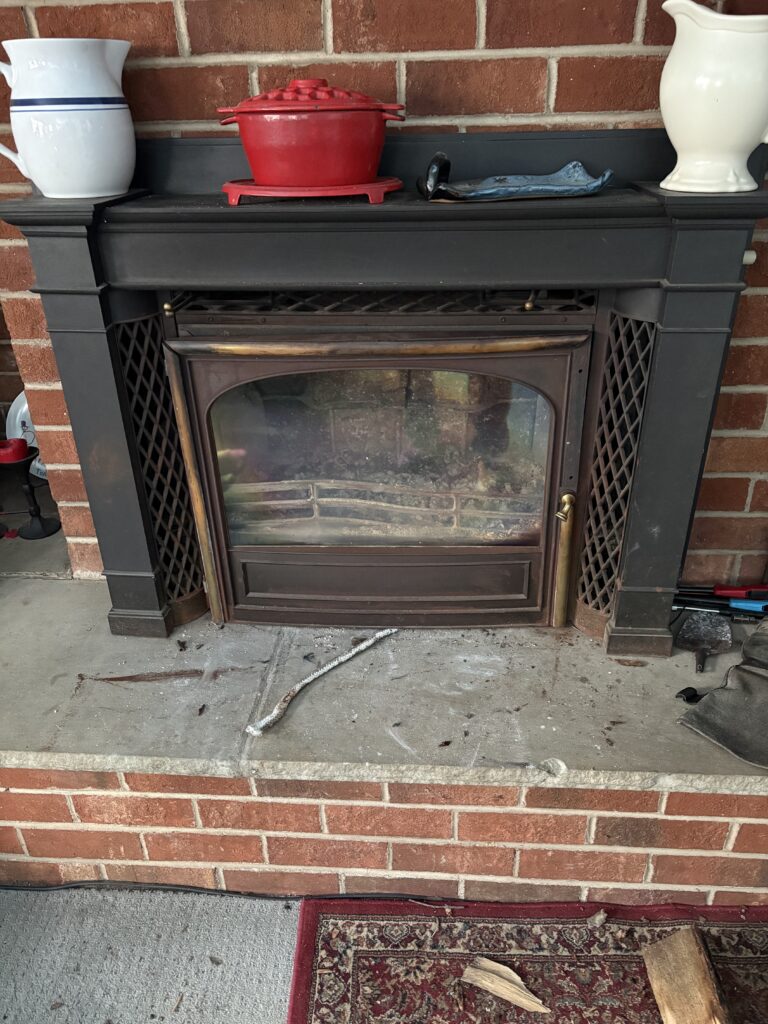
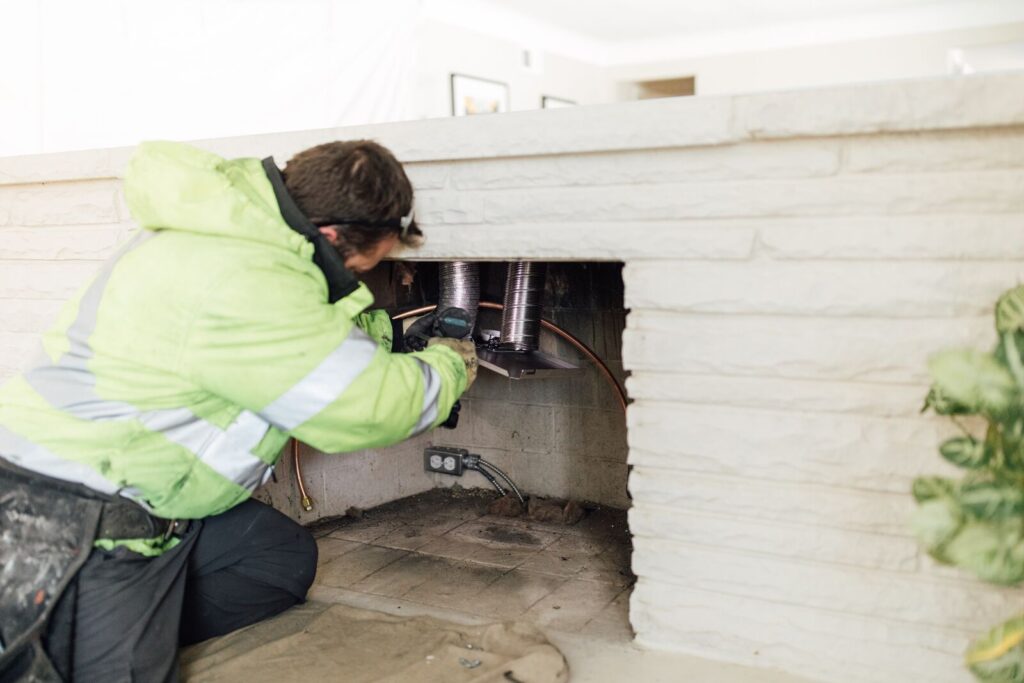
Fireplace glass gets dirty from use. Fireplace glass turns black due to unburned carbon tars and creosote depositing on the surface during incomplete combustion. Over time, combustible material builds up and leaves behind a residue. When it comes to servicing and maintaining a gas fireplace, cleaning the glass is standard practice at a yearly service call. What happens at a gas fireplace service call?

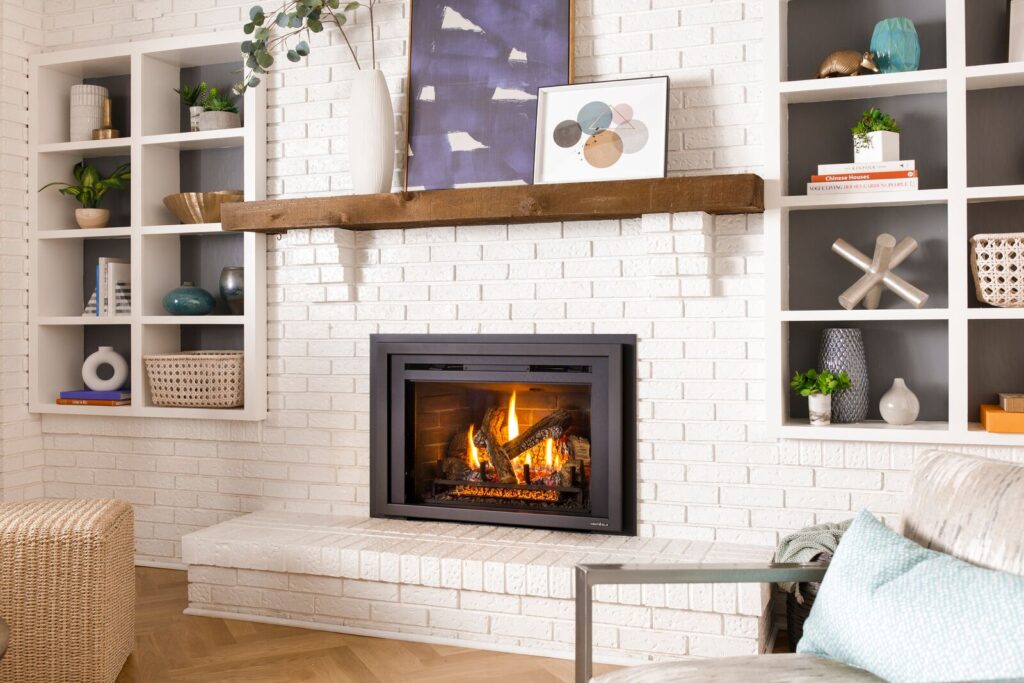
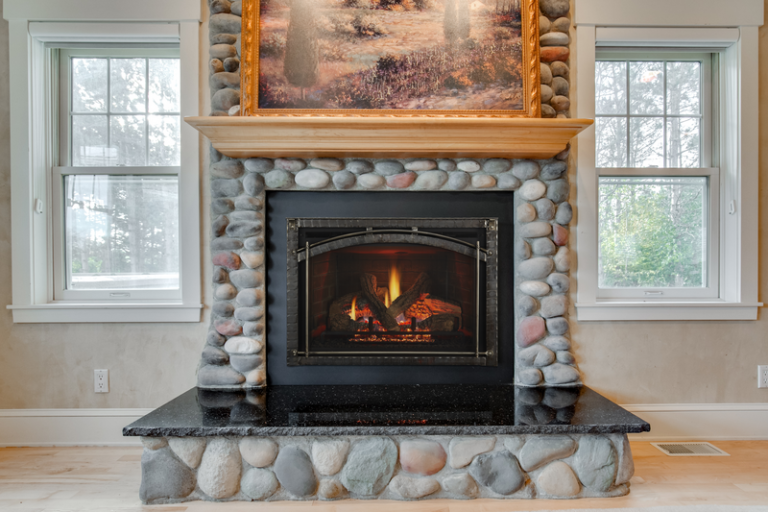
Gas fireplace insert installed to radiate more heat from a traditional masonry firepalce

Common Reasons for Black Fireplace Glass

Incomplete combustion, improper air-to-fuel ratios, or mechanical restrictions deposit soot, carbon, or dust on glass across all hearth fuel types. Here are some of the most common reasons for black fireplace glass:

Fuel TypeInstallation TypePrimary Causes of Blackened GlassSafety Hazard & Corrective Path
WoodFreestanding Stoves & Inserts

Wet wood (>20% moisture), choked primary air intake, damaged door gaskets, or firewood touching the glass.

Creosote Hazard: Flammable buildup in flue. Burn dry wood, conduct a door gasket paper test, and perform an annual NFPA 211 Level 2 inspection.

WoodOpen Masonry Fireplaces

(For glass doors.) Poor chimney draft, cold flue temperatures, restricted throat damper, or unseasoned wood causing smoke spillage.

Flue Obstruction: Warm flue before lighting, verify damper opening, and inspect flue liner for creosote or cracks.

PelletFreestanding Stoves & InsertsClogged burn pot, restricted combustion air intake, low-quality high-ash pellets, or a failing combustion blower. Pellet needs frequent cleaning!

Inefficient Combustion: Clean burn pot daily, adjust combustion air shutter, and vacuum pellet vent pipe.

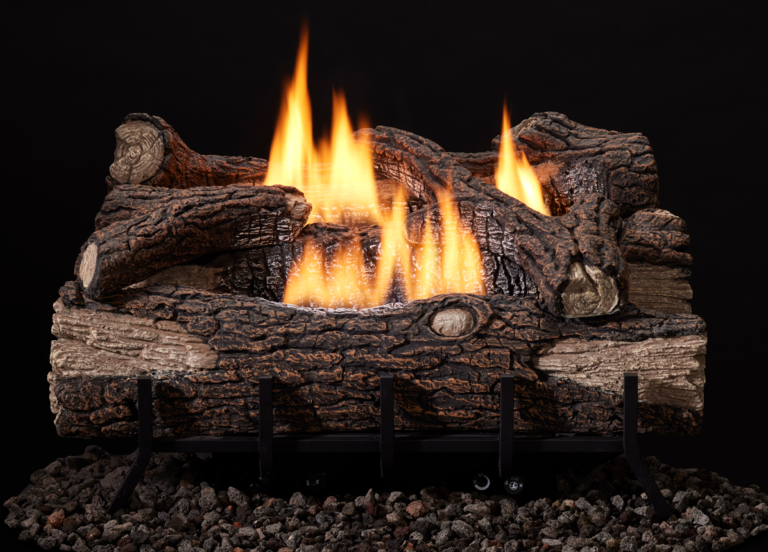
GasDirect Vent & Gas InsertsDirect flame impingement on ceramic logs, closed primary air shutter (rich air/fuel mixture), misaligned logs, or incorrect gas pressure.Carbon Sooting: Clean soot from heat exchanger and glass, realign logs to exact manual specifications, and adjust air shutter.
ElectricBuilt-in & Freestanding UnitsNon-combustion; caused by ambient room dust/pet hair drawn in by blowers and scorched on heating elements, or static attraction.Airflow Obstruction: Wipe glass with a microfiber cloth; vacuum air intake grilles and blower compartments regularly to prevent thermal cut-off trips.
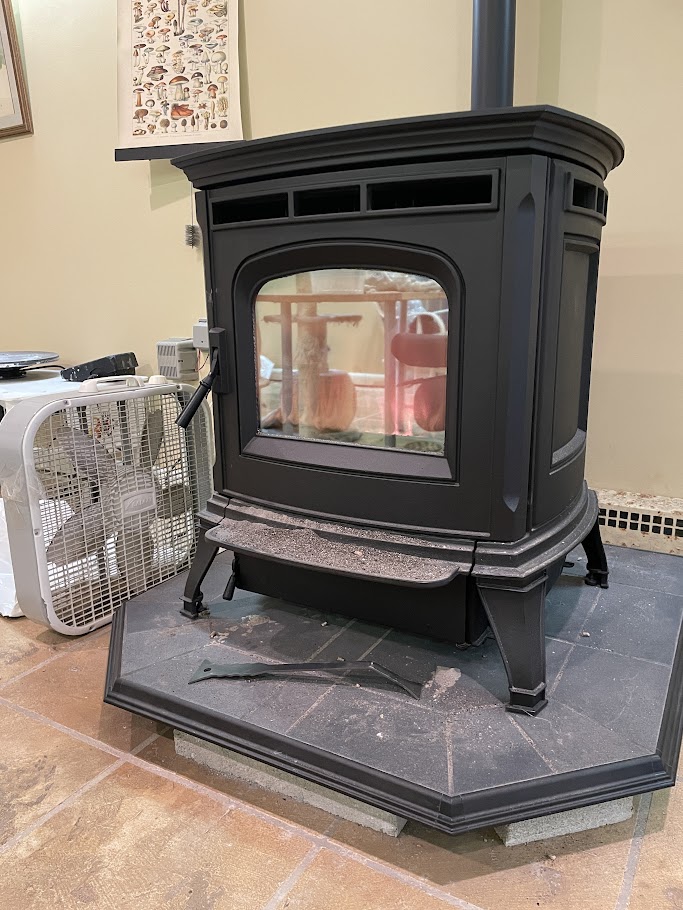
pellet stove in basement

What is the Best Way to Clean Dirty Fireplace Glass?

The safest and most effective way to clean dirty fireplace glass depends on your fuel type, but always ensure the glass is completely cold to prevent thermal shock or severe burns.

Wood Appliance Glass (The Ash Method)

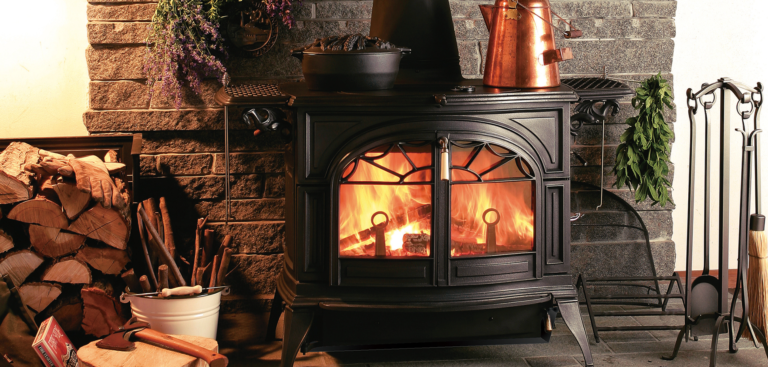
Good news, if you have a pellet stove, pellet insert, wood stove, wood fireplace insert or zero-clearance wood fireplace you can use soot, a bowl of water and a paper towel to create a paste. Cleaning the glass on your wood burning stove is easy and free! Amazing how ash can be used to clean the glass with water and muscle.

  • Preparation: Confirm the stove or insert is cold to the touch.
  • Dip & Scrub: Dampen a paper towel or newspaper, dip it directly into fine, cool wood ash, and scrub the glass in small circles. The fine wood ash acts as a mild, natural abrasive that strips away creosote without scratching ceramic glass.
  • Wipe Clean: Wipe away the residue with a clean, damp microfiber cloth or dry paper towel.
 
View this post on Instagram
 

A post shared by James Van Der Beek (@vanderjames)

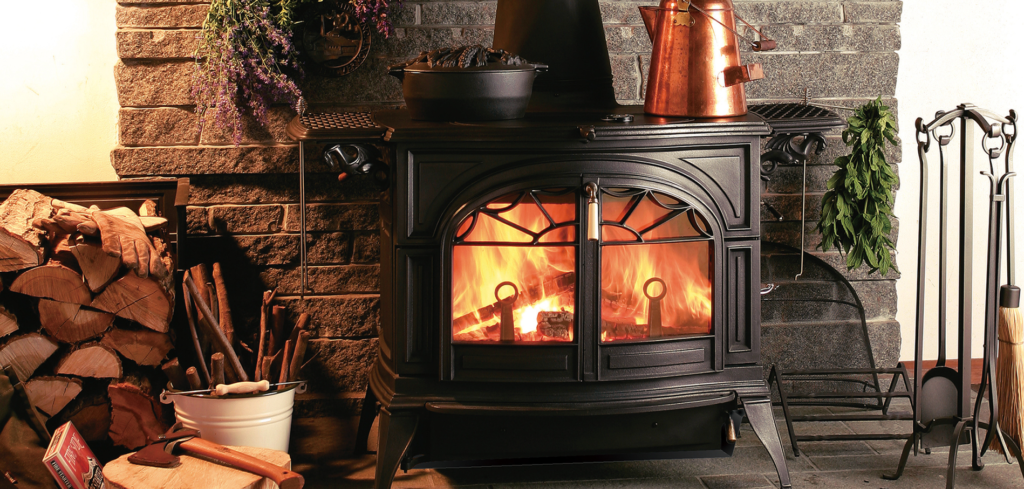
black wood stove

Gas Appliance Glass (White Film & Haze)

We often recommend our customers wait for their yearly gas fireplace service call to let their service tech clean gas fireplace glass. Taking it off can be precarious and difficult to reseal properly. That being said, we are here to teach. Please consult a professional and do not use this information as your only resource when conducting this work. The Stove Stove assumes no liability for the results. We highly recommend a professional service call for cleaning the glass on a sealed gas fireplaces.

  • Preparation: Turn off the burner/pilot light and let the glass cool completely.
  • Apply Cream Cleaner: Use a non-abrasive, cream-based gas fireplace glass cleaner designed specifically to remove white mineral film.
  • Buff Off: Spread the cream across the glass, let it dry to a haze, and buff it clean with a dry microfiber cloth.
  • Avoid Standard Cleaners: Never use ammonia-based cleaners (like Windex) or razor blades; ammonia can etch tempered glass and cause it to weaken under heat.
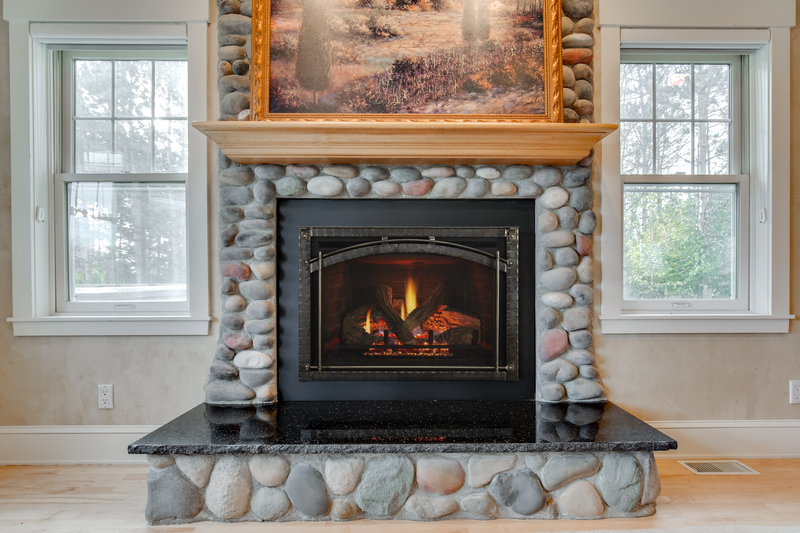
gas insert escape

Critical Safety Rules for Cleaning Fireplace Glass

  • Inspect the Gasket: If dark creosote streaks are forming quickly from the edges of the glass, your glass gasket is failing and allowing unwanted air wash in, which requires gasket replacement.
  • Never Use Abrasive Tools: Avoid steel wool, green scouring pads, or razor blades that scratch the surface and cause structural micro-fractures in high-temperature glass.
pellet fireplace insert

Regular cleaning prevents stubborn, baked-on buildup and ensures a crystal-clear flame view for your home. If dark streaks or air leaks persist after cleaning, your door rope gasket may need replacement to restore safe and efficient combustion. For replacement parts, gasket kits, or professional service, reach out to us at The Stove Shop Fireplace Experts or consult resources at the CSIA. Thank you for taking the time to read this post! If you have any questions, please contact us anytime. 

Fireplace Directory Logo

Looking for a professional fireplace installation company near you? Fireplace Directory can help! Find a qualified fireplace specialist today.

fireplace insert installation near me